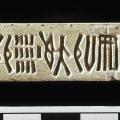
This type of seal is only found in the last part of the Harappan Phase, Period 3C. A similar rectangular seal was found on Mound F in the 1998 excavations of the circular platforms (Trench 43). >
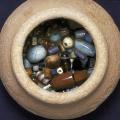
After removal of the overlying sediment it was clear that the pot was filled with beads. Each bead was mapped in and then photographed before removal. In the lower levels were many tiny beads that had settled to the bottom. >
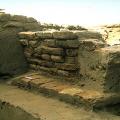
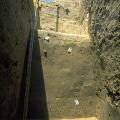
After mapping and photography, the fragile mud brick walls of Trench 54 are covered with a protective layer of burlap and sifted soil to form a sacrificial layer in which dissolved salts can dry and crystallize without damaging the ancient walls. Th… >
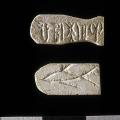
Two inscribed and baked steatite tablets from the Trench 54 area. One has the shape of a fish (H2000-4452/2174-191), while the other has a fish sign inscription (H2000-4477/2227-11). >
Experimental manufacture of steatite beads helps us to understand the intricacies of the process. The thin wafers are perforated and then strung on a cord to grind and polish them prior to firing. >
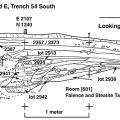
The locations of all important artifacts from Trench 54 South were carefully mapped using standard triangulation methods supplemented by printouts of digital overviews. >
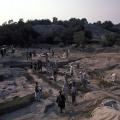
J. Mark Kenoyer sitting in the right foreground takes notes during excavations at the southwest corner of the "granary" (Trench 1SW). The baked brick revetment of the "granary" platform is in the foreground, the southernmost baked brick wall of the … >