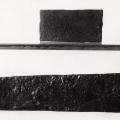
Two copper objects, in two rows. The one on top row has a design etched on it. The one in the bottom row is possibly the copper chisel, which Sahni reported among the finds from Mound F, area of parallel wall: “a large copper chisel (Ae 342) mea… >
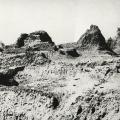
Looking from the northeast to the southwest, this photo shows the plinths left from the excavation of this area. The reason for not excavating these large sections may be due to the fact that there were traces of walls at the uppermost levels. Late… >
It is appropriate that – besides broken seals – among the very first objects that the ancient Indus people represented themselves through four thousand years later were toys. Indeed, it would have been a watershed moment for children in the region a… >
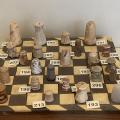
A wide variety of game pieces from Mohenjo-daro on a modern wooden board. Sir John Marshall, one of the earliest excavators at Mohenjo-daro writes in the monumental work summarizing the first finds at the site (Mohenjo-daro and the Indus Civiliza… >
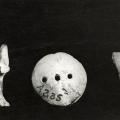
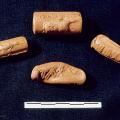
Terra cotta tokens or tablets from Harappa. In Area G, south of the recently discovered gateway on Mound ET(20), excavators found a concentration of as many as 31 identical cylindrical terracotta tablets (top center), but it is not known what they c… >
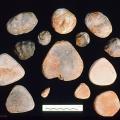
Terra cotta nodules and cakes of different shapes are common at most Indus sites. These objects appear to have been used in many different ways depending on their shape and size. The flat triangular and circular shaped cakes may have been heated … >
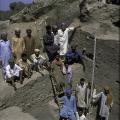
J. Mark Kenoyer (top center, arm outstretched) and excavation team gather at the edge of Trench 39 South at the end of the excavation season. Over the past twelve years many of the local workmen from Harappa and surrounding villages have become extr… >
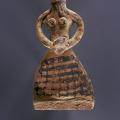
Early Harappan female figurine holding a bowl in her two hands. The face is painted with bold eyes and a necklace with pendant beads is painted at the throat. The lower body is decorated with cross hatched painted design that may indicate the patter… >
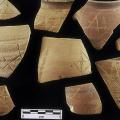
Many sherds inscribed after firing have single geometric signs. This collection of Early Harappan sherds from Periods 1 and 2 (c. 3300-2800 BCE) show a range of geometric signs that are roughly similar to later signs in the Indus script. >
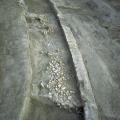
The curving line of the mud brick city wall at the eastern edge of Mound E rose high above the level of an ancient street that followed the exterior of the wall. A small apron or divider wall made of mud bricks was set right in the middle of the str… >