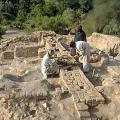
The original excavated structure here is being buried beneath a protective layer made from salvaged ancient Harappan bricks. A distinct layer of modern clay and straw plaster separates the original building from the reconstruction. >
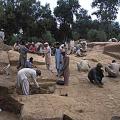
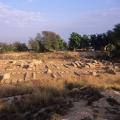
In 2001, excavation of perimeter wall [250] was extended to the Northwest. Here the surface of the wall is being cleared and the bricks outlined. Note the excavation in the foreground left where there was no mud-brick. These regularly spaced rectang… >
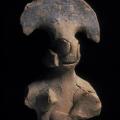
The earliest anthropomorphic figurines from Harappa thus far are from the Early Harappan (Ravi Phase, Period 1, and Kot Diji Phase, Period 2) levels. Among these are stylized seated female figurines with exaggerated buttocks and thighs and joined le… >
The infants being nursed by female figurines are usually very schematically represented by a bent and pinched roll of clay with or without applied eyes. The head, body, and legs of the infant are usually pressed against the female’s breast and torso… >
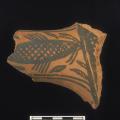
Painted designs on figurines occasionally reached the level of those often found on Harappan pottery, especially in the later periods. An interesting combination of figurines with pottery was the occasional addition of animal heads to pottery, eithe… >
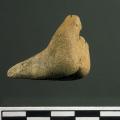
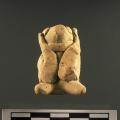
Monkeys are also still found in South Asia, both in the wild and as pets. A few of the Indus figurines represent uniquely primate postures, such as a monkey sitting with its long arms and hands held on either side of its head. Approximate dimens… >
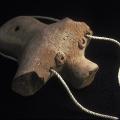
Some movable figurine heads are pierced in other places, such as through the horns on either side of the head. Approximate dimensions (W x H(L) x D): 7.2 x 9.4 x 3.0 cm. >
The so-called "Great Granary" in Mound F. Its earliest levels date to 2450 B.C. A similar structure, also about 50 meters long and built on a massive brick or mud-brick platform, was found at Mohenjo-daro. Influenced by European precedents, early ar… >
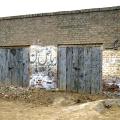
These doorways in modern Harappa show how a town grows into a mound. Dust and dirt in streets slowly collect and cover doorways. Ultimately they are abandoned and new doorways and buildings are constructed above them. This process is underway throug… >
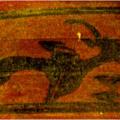
Above: Animal on Burial Jar from Harappa "A long march preceded our arrival at Haripah, through jangal of the closest description. East of the village was an abundance of luxuriant grass, where, along with many others, I went to allow my… >