HARP (Harappa Archaeological Research Project) a group of scholars from a variety of fields dedicated to advancing the study of the ancient Indus Valley civilization.
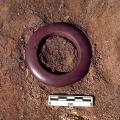
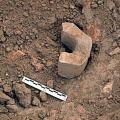
Red stoneware bangle (H2000-4490/9843-01) with no inscription. The lack of inscription may indicate that this may have been a place where the bangles were stored prior to inscribing them for distribution. >
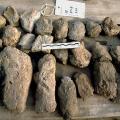
Ravi phase hand-formed (not in molds) mud-bricks were found in the early levels mixed with ash and broken pieces of pottery. They may originally have been part of a firing structure or kiln. >
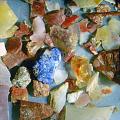
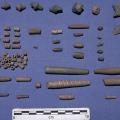
Flakes of various shades of agate, carnelian, jasper, chert, and lapis lazuli indicate the range of raw materials being processed in this part of Harappa during the Ravi phase. All of these raw materials were brought to the site from distant resourc… >
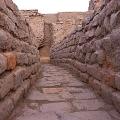
This view along Drain [8] into the mound shows details of the brick construction, the robbed out area at the east end of the drain (background), sloping strata above indicating the existence of an open street drain along the same line as the earlier… >
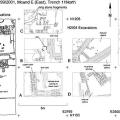
Excavations during the 1997-2001 seasons were carried out inside perimeter wall [250]. Here a partial plan of those excavations shows superimposed levels of Period 3C buildings, all mostly robbed of their baked brick walls. [Mud-bricks are hatched, … >
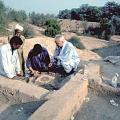
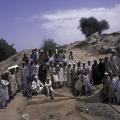
The 1998 excavation crew of the Harappa Archaeological Research Project. Seated at the front left are Mohammad Afzal Khan, representative of the Department of Archaeology, Government of Pakistan, Dr. Jonathan Mark Kenoyer and Dr. Richard H. Meadow… >