Home

Main navigation

  • home
  • slides
  • essays
  • articles
  • books
  • video
  • q & a
  • blog
Secondary menu
  • about us
    • scholars
    • privacy
    • support
    • image rights
    • credits
    • contact us
  • resources

Ancient Indus questions answered by Rita P. Wright, Associate Professor in the Department of Anthropology at New York University, Assistant Director of the Harappa Archaeological Research Project, and Director of the Beas Landscape and Settlement Survey near Harappa. She is author of The Ancient Indus: Urbanism, Economy, and Society and on this website the essay Beas Landscape and Settlement Survey.

86. If you were a child in the ancient Indus valley, what would an average day be like for you?

Gwen Robbins Schug
Nisha Yadav
Paolo Biagi
Rita P. Wright

Gwen Robbins Schug, Paolo Biagi, Rita P. Wright and Nisha Yadav answer.

32. What did the Harappa people eat? From what flowers/minerals did they get their pigments from?

Rita P. Wright

Submitted by Giuseppe

Rita Wright
The Harappans in the urban period had a varied diet principally based on wheat, barley, millets and cattle, sheep and goat. In my book, Ancient Indus: Urbanism, Economy and Society, there are two chapters that list these different foods. These are Chapters 6 and 7. My answer is based on the result of the research of Steven Weber our paleobotanist sometimes called archaeobotanist.

87. Is there any indication of slavery or ritual human sacrifice in the IVC?

Gwen Robbins Schug
Jonathan Mark Kenoyer
Rita P. Wright

Gwen Robbins Schug, Jonathan Mark Kenoyer and Rita P. Wright answer.

17. What is your considered opinion on how and why the Indus valley civilization came to an end?

Jane McIntosh
Richard H. Meadow
Shereen Ratnagar
Rita P. Wright

Submitted by Manzoor

Jane McIntosh
I don't think that there was a single cause of the Indus civilization's end; rather it was the cumulative effect of a number of factors:

88. What role do you think the Rohri flint mines played in the Indus civilization?

Massimo Vidale
Paolo Biagi
Randall Law
Rita P. Wright

Randall Law

30. Was there something mysterious that provided balance to Mesopotamian-IVC trade?

Jane McIntosh
Shereen Ratnagar
Rita P. Wright

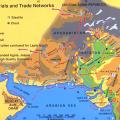
Trade between Indus Valley and Mesopotamia appears rather skewed in IVC's favour. IVC exported Gold jewelery, Ivory seals & boxes, Timber, Cotton textiles, Copper & bronze fish-hooks, Carnelian & precious stone beads, Live chicken, Shell & bone inlays, and even Water buffaloes. Mesopotamia exported only Silver, Tin and Copper ingots, Woollen textiles and Bitumen. Could it have been be sex trafficking from Ur, Dilmun and Magan to Sutkagen Dor, Sokhta Koh, Balakot and Allahdino?

89. What is the relevance of Harappan civilization in today's world?

Gwen Robbins Schug
Massimo Vidale
Mayank Vahia
Nisha Yadav
Paolo Biagi
Rita P. Wright

Answered by Massimo Vidale, Mayank Vahia, Gwen Robbins Schug, Nisha Yadav, Paolo Biagi and Rita P. Wright

33. What was the Indus administrative machinery like?

Rita P. Wright

I would like to know something about the nature of the administrative machinery, their irrigation patterns and nature of society...though i am fully aware that the type of sources we have to analyse these things are minimal.

90. Have recent excavations provided more clues to the so called "Granaries"? What was their purpose?

Massimo Vidale
Randall Law
Rita P. Wright

Massimo Vidale
Prof. J. M. Kenoyer, who has recently investigated the Granary at Harappa, is the best person to answer these questions. My impression is that the evidence for the "Granaries" identification is quite flimsy; the type of dig made in the past, simply, was not accurate enough for such an identification, and the various theories so far proposed are pure conjectures. One of these is that the large compartmented building of Harappa was a weaving plant; I like the idea, but at present it is just another guess.

31. What is the best thing that could happen to ancient Indus studies?

Iravatham Mahadevan
Jane McIntosh
Richard H. Meadow
Shereen Ratnagar
Rita P. Wright

Jane McIntosh
Decipherment of the Indus script would be helpful – if nothing else, it should conclusively settle the non-Aryan/Aryan dispute – but the amount of information this would yield is severely limited.

Pagination

  • First page
  • Previous page
  • Page 1
  • Page 2
  • Page 3
  • Next page
  • Last page
Answers by Author (6)
  • Asko Parpola
  • Iravatham Mahadevan
  • Jane McIntosh
  • Richard H. Meadow
  • Rita P. Wright
  • Shereen Ratnagar
© Harappa.com 1995-2026 31