Home

Main navigation

  • home
  • slides
  • essays
  • articles
  • books
  • video
  • q & a
  • blog
Secondary menu
  • about us
    • scholars
    • privacy
    • support
    • image rights
    • credits
    • contact us
  • resources

Blog posts relating to the evolution of the ancient Indus Valley civilization society and practices.

Mohenjo-daro Stupa Mound: Before and After Excavations

The color photograph is a slightly expanded view of the same area from the same angle. The stupa is to the right outside the frame of John Marshall’s original photograph from the 1920's. The new photograph was taken by Mark Kenoyer on Dec. 8, 2013, when Sindh had a Culture Day celebration, and thousands of people were visiting Mohenjo-daro to express their cultural pride in their Sindhi heritage. They were carrying flags and wearing Sindhi ajraks and dancing and singing all over the campus, the museum and the site. >

Touching Mounds at Harappa

Touching Mounds at Harappa, one of the oldest inhabited places on earth, and one of those real world images that makes you think about the relationship between past and present. >

Indus City Layers

How old are ancient Indus cities? Excavations at Harappa show activity going back to approximately 3500 BCE, as do excavations at Mohenjo-daro. Neither site has been fully excavated, however. Attempts to go deep at Mohenjo-daro failed. As Sir Mortimer Wheeler wrote, "The lower level of excavations at Mohenjo-daro have never been reached by excavation due to difficulties of a high water-table. The two photographs illustrate an attempt made with pumps in 1950 to reach the lower levels and the subsequent flooding which happened overnight." (Civilizations of the Indus Valley and Beyond, p. 73). R… >

The Buffalo Sacrifice

Asko Parpola writes: "Early Harappan cultures started moving toward the east and south in about 3000 BCE, and later waves of influence in these same directions came from the Indus civilization. That the Harappan water-buffalo cult had reached penninsular India by the late Harappan on Chalcolithic times is suggested by the large bronze sculpture of water buffalo discovered in 1974 in a hoard at Daimabad, the southernmost Indus site in Maharashtra. >

Interaction Networks of the Ravi Phase

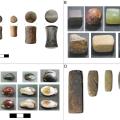
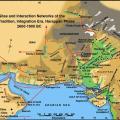
Sir Mortimer Wheeler noted that "Harappa has produced a hint of an antecedent culture... " The so-called Ravi Phase, an early phase of Indus culture (c. 3300-2800 BCE), elaborated by discoveries in the late 1990's by HARP (the Harappa Archaeological Research Project led by Jonathan Mark Kenoyer, Richard H. Meadow and Rita P. Wright) suggests that even before the the full ancient Indus civilization phase at Harappa, raw materials such as agate, lapis lazuli, steatite, marine shell and copper were transformed into ornaments and tools for local trade. For more see Around the Indus in 90 Slide… >

The Politics of Mohenjo-daro

"I stood on a mound of Mohenjo-daro in the Indus valley in the northwest of India," wrote Jawaharlal Nehru in The Discovery of India (1946), "and all around me lay the houses and streets of this ancient city that is said to have existed over five thousand years ago . . ." >

First Street, Mohenjo-daro

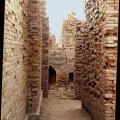
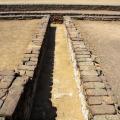
  • Looking north along First Street, Mohenjo-daro. "Only the facades of the eastern side of the street have been cleared, this being the limits decided upon for our excavations in this direction. Beyond this line, two-thirds of the mound, still remains untouched and will undoubtedly provide many buildings of interest for future excavations." (Mohenjo-daro, 1938, I, p. 25). The area to the left has been fully excavated and the area to the right is un-excavated. Later street levels are seen in the background.

Ernest Mackay writes (1938) "As far as we can tell at present, this street appears to be the second most important thoroughfare of the city; for although it is longer than the street that crosses it at right angles, coming presumably from the east gate of the city, the latter [First Street] is undoubtedly wider-along it, the grass-covered road to the camp now runs between the HR and VS Areas." The fourth image shows the layers of excavation on this street, looking into the past. MackKay continues "the general impression that they make upon the eye and mind is that the masonry [stonework] i… >

Mohenjo Daro A Cause of Common Concern

"For the astounding remains of Mohenjo Daro, discovered in 1922 and excavated during the following years, are for the most part in a state of utter disintegration and decay and are rapidly approaching the point of total destruction." >

The Mounds of Harappa by Indus Time Period

The earliest settlement, during Period 1 (c. 3300-2800 BC), was on the west side of Mound AB and NW corner of Mound E. During Period 2 (c. 2800-2600 BC) all of Mounds AB and E came to be occupied, and by the end of Period 3 (c. 2600-1900 BC), the Harappan Period, most of the area covered by the plan was in use. During Periods 4 and 5 (c. 1900-1300 BC) there was a retraction of settlement to the areas of Mound AB, modern Harappa Town, and the NW corner of Mound E. This plan also shows the location of the 2000/2001 excavation areas. >

The Mohenjo-daro Cart

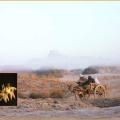
"The favorite toy seems to have been a little pottery cart, to judge from the number of specimens, usually in a damaged condition, which have been found. These miniature carts are practically . . .." >

Pagination

  • First page
  • Previous page
  • Page 1
  • Page 2
  • Page 3
  • Page 4
  • Next page
  • Last page
Blog Posts by Subject (16)
  • Animals
  • Art
  • Children
  • City Life
  • Conferences
  • Crafts and Industry
  • Evolution
  • Excavations
  • Food
  • Homes
  • Media
  • Museums
  • Mysteries
  • News
  • People
  • Seals
© Harappa.com 1995-2026 31