Home

Main navigation

  • home
  • slides
  • essays
  • articles
  • books
  • video
  • q & a
  • blog
Secondary menu
  • about us
    • scholars
    • privacy
    • support
    • image rights
    • credits
    • contact us
  • resources

Blog posts relating to the evolution of the ancient Indus Valley civilization society and practices.

The Mounds of Harappa by Indus Time Period

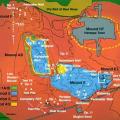
The earliest settlement, during Period 1 (c. 3300-2800 BC), was on the west side of Mound AB and NW corner of Mound E. During Period 2 (c. 2800-2600 BC) all of Mounds AB and E came to be occupied, and by the end of Period 3 (c. 2600-1900 BC), the Harappan Period, most of the area covered by the plan was in use. During Periods 4 and 5 (c. 1900-1300 BC) there was a retraction of settlement to the areas of Mound AB, modern Harappa Town, and the NW corner of Mound E. This plan also shows the location of the 2000/2001 excavation areas. >

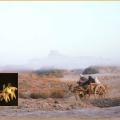
The Mohenjo-daro Cart

"The favorite toy seems to have been a little pottery cart, to judge from the number of specimens, usually in a damaged condition, which have been found. These miniature carts are practically . . .." >

Boating: Now and Then

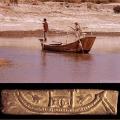
A molded tablet from Mohenjo-daro ca. 2300 BCE, below while above, flat bottomed ferry boats are still used today to help travelers cross the Indus River near Mohenjo-daro. The boat on the seal is part of "a three-sided molded tablet, with boat, gharial and script. One side is a flat-bottomed boat with a central hut that has leafy fronds at the top of two poles. Two birds sit on the deck, and a large double rudder extends from the rear of the boat." (Kenoyer, Ancient Cities, p. 192) See also An Indus Boat Seal and Indus-style Boat. >

Night of the Indigo

The Bengali filmmaker Satyajit Ray's book of short stories The Unicorn Expedition, the title story of which concerns Mohenjo-daro, includes another brilliant story which may also have connections to the ancient Indus civilization. It is called Night of the Indigo and begins with "My name is Aniruddha Bose. I am twenty-nine and a bachelor. For the last eight years I've been working in an advertising agency in Calcutta. . . .. The last few months I haven't written at all, but I have read a lot about indigo plantations in Bengal and Bihar in the nineteenth century. . . . and how, finall… >

The Evolution of Indus Script

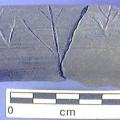
The origins of Indus writing can now be traced as far back as the Ravi Phase (c. 3300-2800 BCE) at Harappa. Some inscriptions were made on the bottom of the pottery before firing. Other inscriptions such as this one were made after firing. This inscription (c. 3300 BCE) appears to be three plant symbols arranged to appear almost anthropomorphic. The trident looking projections on these symbols seem to set the foundation for later symbols. See also Dr. Parpola's Deciphering the Indus Script and Iravatham Mahadevan's The Indus Script. >

How Old is Mohenjo-daro?

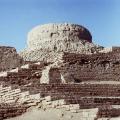
Recent claims suggest that Rakigarhi is older (ca. 7000 BCE) than Mohenjo-daro. Whereas at Harappa thus far evidence of settlement prior to 3500 BCE has not been found (among limited excavations), of Mohenjo-daro's age excavator Ernest Mackay wrote: "Owing, however, to the fact that the bed of the Indus has risen some twenty feet or more in the course of the ages, it is impossible without very costly plumbing machinery to explore the earliest levels of Mohenjo-daro; in one place, where the excavations have penetrated forty feet below the surface of one of the principal mounds, the objects fo… >

The First Images of the Announcement: The Illustrated London News

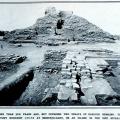
The first images of the announcement of the discovery of the ancient Indus Valley civilization in the Illustrated London News, on September 20, 1924. "The remarkable discoveries here illustrated put back by several centuries the date of the earliest known remains of Indian civilization. In his deeply interesting article describing them (on page 528) Sir John Marshall compares them to the work of Schliemann at Tiryns and Mycenae, where likewise it fell to the archaeologist to break new ground and reveal the relics of a long forgotten past. "It looks at this moment," writes Sir John, "as if we … >

The Best Ancient Indus Reimaginings

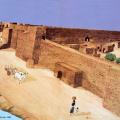
1. A conjectural view of Indus settlement at Surkotada. Painting by Lalit Jain, Archaeological Survey of India. 2. One of the most detailed reconstructions of an ancient Indus gateway, this one on Mound E at Harappa. >

Ancient Indus Chronology vs. Other Ancient Civilizations

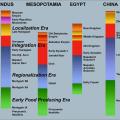
Whether or not the recent new pushing back ancient Chinese civilization thousands of years is true or not, it is likely that the origins of all ancient civilizations will be pushed back in the years to come. We know very little about possible antecedent cultures, whether in Rakigarhi, Balochistan, southwestern Iran or northern China. >

Prehistoric Rock Paintings and Ancient Indus Motifs

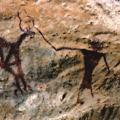
One of the least explored avenues in ancient Indus research, one which would so clearly reinforce the available evidence for the long, deep local roots of Indus civilization stretching back deep into the Stone Age (25,000-30,000 years back). >

Pagination

  • Page 1
  • Page 2
  • Page 3
  • Page 4
  • Next page
  • Last page
Blog Posts by Subject (16)
  • Animals
  • Art
  • Children
  • City Life
  • Conferences
  • Crafts and Industry
  • Evolution
  • Excavations
  • Food
  • Homes
  • Media
  • Museums
  • Mysteries
  • News
  • People
  • Seals
© Harappa.com 1995-2026 31