Harappa

Harappa, Punjab ancient Indus civilization excavations, figurines, seals and other objects.

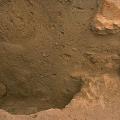
Greenish clay layers were found in a deep depression in the center of the HARP-excavated platform. One theory that is being investigated is that the platform and the central pit were used for production of indigo dye (Trench 43). >

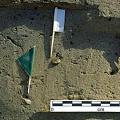
Ravi phase bead manufacturing debris includes extremely fine microdebitage as well as flakes and drills (marked with the green flag). >

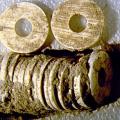
This set of steatite disc beads, each about 1 cm in diameter, were found in the Kot Diji phase street and appear to be a necklace segment that was lost in the trash. The manufacturing marks are clearly visible. The matched nature of the beads sugges… >

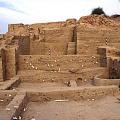
Overview of Harappa Mound AB, Trench 39N, showing the Kot Diji phase levels in the foreground and the Harappa phase levels above, beginning with a baked brick drain (on the far left) and ending with the brick wall that can be seen just behind an… >

The original excavated structure here is being buried beneath a protective layer made from salvaged ancient Harappan bricks. A distinct layer of modern clay and straw plaster separates the original building from the reconstruction. >

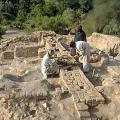
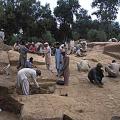
In 2001, excavation of perimeter wall [250] was extended to the Northwest. Here the surface of the wall is being cleared and the bricks outlined. Note the excavation in the foreground left where there was no mud-brick. These regularly spaced rectang… >

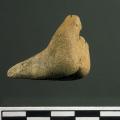
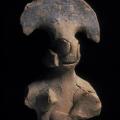
The earliest anthropomorphic figurines from Harappa thus far are from the Early Harappan (Ravi Phase, Period 1, and Kot Diji Phase, Period 2) levels. Among these are stylized seated female figurines with exaggerated buttocks and thighs and joined le… >
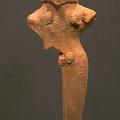

The infants being nursed by female figurines are usually very schematically represented by a bent and pinched roll of clay with or without applied eyes. The head, body, and legs of the infant are usually pressed against the female’s breast and torso… >

Painted designs on figurines occasionally reached the level of those often found on Harappan pottery, especially in the later periods. An interesting combination of figurines with pottery was the occasional addition of animal heads to pottery, eithe… >