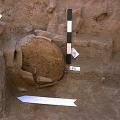
Excavation of the fill inside the jar (image 33) indicates it was left exposed for some time and gradually filled with silt as the room became covered with debris (Trench 41NE). >
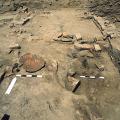
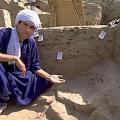
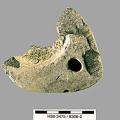
A broken terracotta bird cage (near the scale at right) was discovered next to the remains of a broken storage jar that had been reused as a hearth (near the scale at left) (Trench 43). >
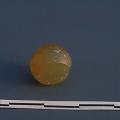
Spherical agate weight with one side flattened (H2000-4496/9880-01). This weight does not conform to the standard Harappan weight system and may indicate the use of a separate weight system for international trade with Central Asia or other regions. >
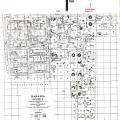
Plan of Vat's excavations showing circular platforms. In some cases remnants of the baked brick walls that probably surrounded each platform can be seen on the plan, although earlier and later walls are also shown. From M.S. Vats (1940) Excavations … >
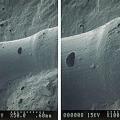
Scanning electron microscope photos of a molded impression of the drill hole indicate that the amazonite bead (8) was drilled with a tapered chert or jasper drill. >
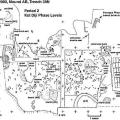
Plan view of Trench 39N Kot Diji phase levels (Period 2: 2800-2600 BC) with locations noted for major finds: sealing, elephant seal, inscribed sherds, limestone weight. This area appears to have been a street running between mud-brick structures. Ha… >
In Kot Diji phase sediment that had washed into the street, Brad Chase discovered a button seal (close-up in 44) quite similar to seals recovered from the site of Rehman Dheri in to the Northwest in the Gomal Valley. >
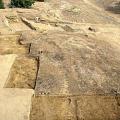
Ashy debris deposits continued to accumulate outside of the perimeter wall, covering the curtain wall. These date to the end of Harappa Period 3B and the beginning of Period 3C. The area continued to be devoid of structures, although what later … >
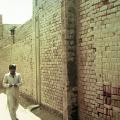
In the modern town of Harappa, a covered drain built along the outside of a house takes sewage water from a second storey latrine and bathroom to the street level drain without splashing people passing by on the street. >