Harappa

Harappa, Punjab ancient Indus civilization excavations, figurines, seals and other objects.

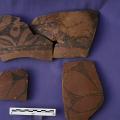
Whereas many other motifs of the Ravi Phase (Period 1) disappear in the later Kot Diji Phase (Period 2), the intersecting circle and fish scale motifs continued to be used, but they came to be executed in black paint on a red slip. In this image the… >

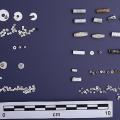
Steatite beads from the Early Harappan Periods at Harappa. On the right are many different styles of Ravi Phase beads (circa 3300-2800 BC). Note the blue green glazed bead in the center and the row of unfired beads in the second to the bottom row. T… >

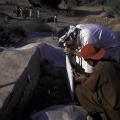
One of the most exciting discoveries of the 1998 excavation season was finding a seal impression or sealing in a hearth of the Early Harappan Period (Kot Diji Phase, circa 2800 BCE). Here William Belcher is seen photographing the important discovery… >

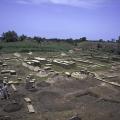
Limited excavations in the granary area at Harappa starting in 1997 (Trench 41 area) and 1999 have begun a new examination of this important building, first excavated in the 1920s. Although referred to as a granary, this characterization by earlier … >

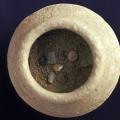
Initial probing to determine the contents of this small pot (79) from Trench 38, Late Harappan Period, revealed the presence of carnelian and faience beads. >

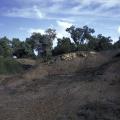
After surface collections, the Trench 54 area of Mound E was selected for excavations because it allowed the exposure of a large area of the earliest levels of the ancient Harappan Period city, dating to approximately 2600-2450 BC. >

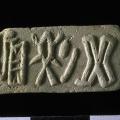
Mold-made faience tablet with script found in the eroded surface debris of Trench 54 (H2000-4484/2227-15). >

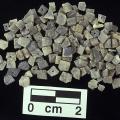
Hundreds of unfinished steatite beads were found in one small area an ashy floor in Trench 54. Some of the tiny wafers are perforated. >

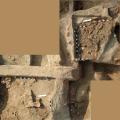
Composite overview of the steatite and faience workshop area in Trench 54 South taken using the bamboo ladder. Two images were pieced together on the computer to make this composite. North is to the right. >

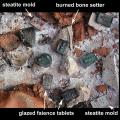
Fully and partially glazed faience tablets and other fired objects could be examined after the fire had cooled and the canister opened. The steatite molds were also included in the canister to see how they would be affected by this type of firing. >