Harappa

Harappa, Punjab ancient Indus civilization excavations, figurines, seals and other objects.

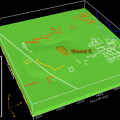
Using maps and cross-sections of the cultural deposits from HARP, surfaces were generated to represent the interfaces of cultural layers in the mounds at Harappa. This represents the growth of the city of ancient Harappa vertically and through time… >

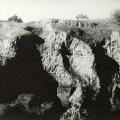
Daya Ram Sahni continues his narrative after the ringstone discussion on the Mound AB excavations: "The floor level of the building referred to above was reached at the depth of about thirteen feet below the surface of the mound. The portion of t… >

"In order to trace some more walls of the two blocks of the Great Granary Mr. Sahni made a few stray extensions about the centre of Trench A both towards the east and west. In the former direction, that part which lies to the north of corridor e was… >

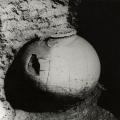
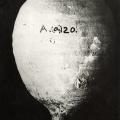
Large Jar embedded in the south site of a small wall in front of a tiny cell near wall No. 17 in A (b). Photograph of a jar insitu. Sahni excavated a long Trench A in Mound F, which Vats reported in detail: “In order to trace some… >

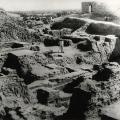
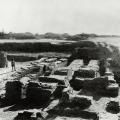
Published in ARASI 1924-25, Plate XXV (b). Title: ‘Harappa: Mound B, A large brick building’. “Stratum No. 5 was occupied by a brick building of considerable dimension (Plate XXV a [this should be b]) which came to light 24’ below the hi… >

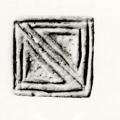
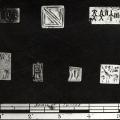
The seals are numbered 1-7 from top left to bottom right. Seal 1: Mound A-B Sahni writes: "The seventh stratum will probably be found to be occupied by a building of considerable magnitude though so far only a portion of it… >

Trench A(b) is one of eastward trenches cut by Daya Ram Sahni in Mound F. "In order to trace some more walls of the two blocks of of the Great Granary Mr. Sahni made a few stray extensions about the centre of Trench A both towards the east and we… >

"In order to trace some more walls of the two blocks of the Great Granary Mr. Sahni made a few stray extensions about the centre of Trench A both towards the east and west. In the former direction, that part which lies to the north of corridor e was… >

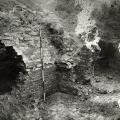
View of three thinner and three stouter walls. For Sahni’s description of the excavations at this area see ARASI 1924-25, p. 76. NOTES: 1. Photographs Parallel Walls, 60, Parallel Walls, Block of Parallel Walls 2, Block of Parall… >