Harappa

Harappa, Punjab ancient Indus civilization excavations, figurines, seals and other objects.

After many decades of research, the Indus Civilization is still something of an enigma -- an ancient civilization with a writing system that still awaits convincing decipherment, monumental architecture whose function still eludes us, no monumental … >

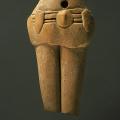
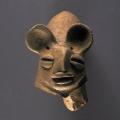
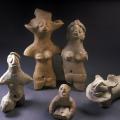
It has been suggested that some feline figurines have anthropomorphic facial features. While features such as "coffee bean" eyes are unusual, the facial features of many animal figurines are stylized. Such features as beards are not necessarily anth… >

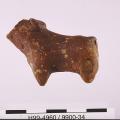
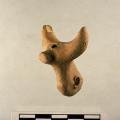
The movable heads of figurines often depict cattle. They are usually pierced laterally through the neck and vertically or sagittally through the head in order to secure them to the bodies and control them with a cord. Approximate dimensions (W x… >

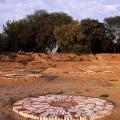
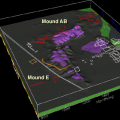
These platforms are often called workmen's platforms, and were first thought to have been used to thresh grain for what was also thought to have been the nearby "Great Granary." >

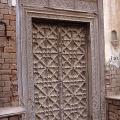
The surviving town of Harappa provides many clues to ancient times. No doors have been found in excavations, but terracotta toys and other evidence suggest that ancient doorways were much like this one in modern Harappa, down to the lock or fastener… >

An enormous amount of work to do, and only a tiny proportion most ancient Indus sites like Harappa, Mohenjo-daro and Dholavira have been excavated. >

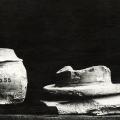
The lid on the left – "shaped like a vase" – shows how varied these objects interpreted as covers could be, including the complex "dish cover" on the right. Sahni concluded, of which these objects fall into the first category: "The excavations we… >