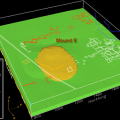
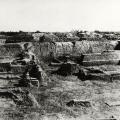
The mounds at Harappa remain largely unexcavated. Approximately half a percentage of the site's area was unearthed each season by the Harappa Archaeological Research Project (HARP) in the 1990s. >
Among the objects found in the large earthen chati [A 233] and a second example which would have been most familiar to Daya Ram Sahni were "earthenware bangles of various sizes were found in large abundance. A few complete specimens were fo… >
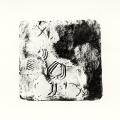
These three seals all have the same unicorn animal motif and a ritual container placed below the head of the animal. The script location and carving styles indicate that the seals belong to different time periods. The right hand seal probably dates … >
Sculpture in thickness of wall in the N.E. corner of pit II from S.E. The photograph is of brick structure, with a label PII 99. No sculpture is visible. PII is Pit II, AB Mound, and Sahni stated that: “No structural remains were met with in t… >
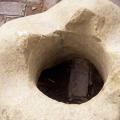
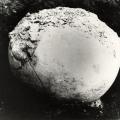
Earthen Jar no. 95 found in Pit IV. Broken jar. Sahni, however, noted “large sized funerary urns” from Pit II, but only a cell and a covered brick drain and “no other objects of any kind” from Pit IV. - Daya Ram Sahni ARASI 1924-25>
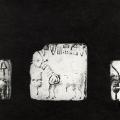
Seals are numbered left to right. Seal 1: [no description found]Seal 2: A263, Mound F, north-western end of Trench A "Westward along the north-western end of Trench A Mr. Sahni made another extension… >
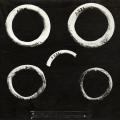
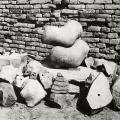
Mound A-B "The next three strata were devoid of any structural remains though the lowest of them was packed with a large number of undulating stone rings of the same character as those described by General Cunningham. What purpose they served rem… >
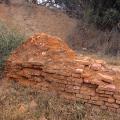
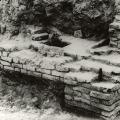
Parallel walls find mention in two places in the Annual Report of the Archaeological Survey of India 1924-25 (published 1927) [hereafter ARASI 1924-25]. Sahni: “During the season 1924-25 excavations were continued at the low mou… >