Harappa

Harappa, Punjab ancient Indus civilization excavations, figurines, seals and other objects.

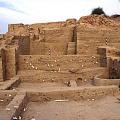
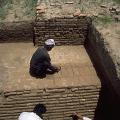
A massive baked brick revetment wall [329] surrounds the solid mud-brick foundation platform [50] of the "granary" that measures approximately 51 meters north-south and 41 meters east-west. Based on analysis of the pottery and other finds from below… >

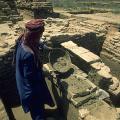
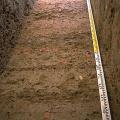
Superimposed street levels inside the city wall indicate that this area was kept clear until the last phase of the Period 3C occupation when structures were built encroaching onto the street (Trench 41NE) >

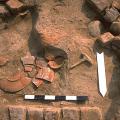
Excavations in Trench 43 revealed collections of broken pottery that date to the final phases of the Harappan occupation of Period 3C, ca. 1900 BC. Note the antler piece (image 58) to the right of the broken dish. >

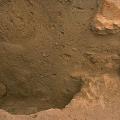
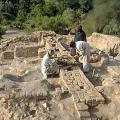
Greenish clay layers were found in a deep depression in the center of the HARP-excavated platform. One theory that is being investigated is that the platform and the central pit were used for production of indigo dye (Trench 43). >

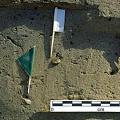
Ravi phase bead manufacturing debris includes extremely fine microdebitage as well as flakes and drills (marked with the green flag). >

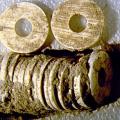
This set of steatite disc beads, each about 1 cm in diameter, were found in the Kot Diji phase street and appear to be a necklace segment that was lost in the trash. The manufacturing marks are clearly visible. The matched nature of the beads sugges… >

Overview of Harappa Mound AB, Trench 39N, showing the Kot Diji phase levels in the foreground and the Harappa phase levels above, beginning with a baked brick drain (on the far left) and ending with the brick wall that can be seen just behind an… >

The original excavated structure here is being buried beneath a protective layer made from salvaged ancient Harappan bricks. A distinct layer of modern clay and straw plaster separates the original building from the reconstruction. >