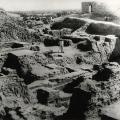
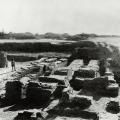
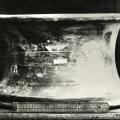
Published in ARASI 1924-25, Plate XXV (b). Title: ‘Harappa: Mound B, A large brick building’. “Stratum No. 5 was occupied by a brick building of considerable dimension (Plate XXV a [this should be b]) which came to light 24’ below the hi… >
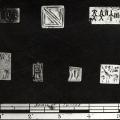
The seals are numbered 1-7 from top left to bottom right. Seal 1: Mound A-B Sahni writes: "The seventh stratum will probably be found to be occupied by a building of considerable magnitude though so far only a portion of it… >
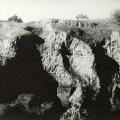
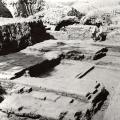
Trench A(b) is one of eastward trenches cut by Daya Ram Sahni in Mound F. "In order to trace some more walls of the two blocks of of the Great Granary Mr. Sahni made a few stray extensions about the centre of Trench A both towards the east and we… >
"In order to trace some more walls of the two blocks of the Great Granary Mr. Sahni made a few stray extensions about the centre of Trench A both towards the east and west. In the former direction, that part which lies to the north of corridor e was… >
View of three thinner and three stouter walls. For Sahni’s description of the excavations at this area see ARASI 1924-25, p. 76. NOTES: 1. Photographs Parallel Walls, 60, Parallel Walls, Block of Parallel Walls 2, Block of Parall… >
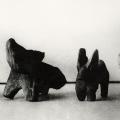
Four in a row: of them one ram and one unicorn. Vats stated: “Animal figures, mostly in terracotta, have been found in very large numbers at Harappa. … Harappa offers a greater variety of animal figures than those yet published from Mohenjo-daro… >
From Mound A-B, strata VI and VII. Image Plate XXc is published in the 1923-24 report. - Daya Ram Sahni, 1926. Annual Report Of The Archaeological Survey Of India 1923-24, pg 54. Image: Plate XX c. These brick founda… >
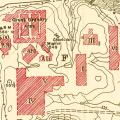
"Six large trenches have been sunk in this mound, viz., three to the west and three to the east of the central belt. The former comprise the Great Granary Area (Trench II) with one small Trench Ae to its south-west and two Trenches Af and Ai to its … >
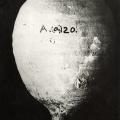
In his 1921 summary of pottery finds, Daya Ram Sahni called out "earthenware rests for dishes or pitchers" of which this one was considered the prime example (p. 13). "This type of ring stand was made to support large jars with narrow or rounded … >