Slides on the archaeology and excavation of ancient Indus Valley sites including Harappa by Jonathan Mark Kenoyer of the University of Wisconsin, Madison.
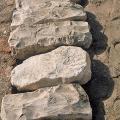
This large drain was partly covered along its length with large flat blocks made out of limestone from the Rohri hills, which are located to the north and on the other side of the Indus River. >
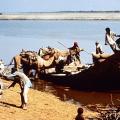
A traditional bullock cart and flat bottomed ferry boat are still used for local transport along the Indus River near the ancient site of Mohenjo-daro, Sindh, in Pakistan. >
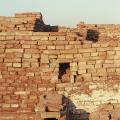
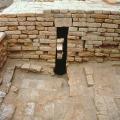
Almost every house unit at Mohenjo-daro was equipped with a private bathing area with drains to take the dirty water out into a larger drain that emptied into a sewage drain. Many of these bathing areas had water tight floors to keep moisture from s… >
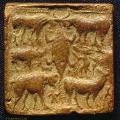
Terracotta sealing from Mohenjo-daro depicting a collection of animals and some script symbols. This sealing may have been used in specific rituals as a narrative token that tells the story of an important myth. >
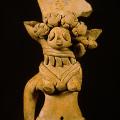
Female figurine with four flowers arranged on the front part of a fan shaped headdress with cups at two sides and braided edging. This figurine is heavily adorned with a triple strand choker with pendant beads, a double strand necklace with central … >
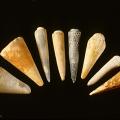
Decorated terra cotta cones are found at both Mohenjo-daro and Harappa, but no one knows what they may have been used for. Some scholars suggest that they were hung on a string as a plumb-bob for use by masons and carpenters. Others feel that they m… >
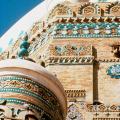
The technique of glazing blue-green tiles using recipes that are very similar to those used by the Indus craftsmen is still practiced in many centers throughout the Indus valley. In Multan, the tomb of the Muslim saint Shah Rukn-e-Alam is covered wi… >
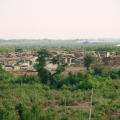
The northeastern sector of Mohenjo-daro was excavated by K. N. Dikshit and designated DK-G area. Pathways allow visitors to visit the excavations, and an unexcavated portion of the site in the right foreground show what the site looked like prior to… >
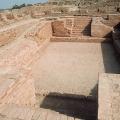
The Great Bath was entered using two wide staircases, one from the north and one from the south. The floor of the tank is watertight due to finely fitted bricks laid on edge with gypsum plaster. Brick colonnades were discovered on the eastern, north… >