Home

Main navigation

  • home
  • slides
  • essays
  • articles
  • books
  • video
  • q & a
  • blog
Secondary menu
  • about us
    • scholars
    • privacy
    • support
    • image rights
    • credits
    • contact us
  • resources

Jonathan Mark Kenoyer

Slides on the archaeology and excavation of ancient Indus Valley sites including Harappa by Jonathan Mark Kenoyer of the University of Wisconsin, Madison.

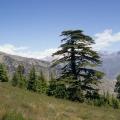
Chitral Valley

The aromatic cedar or deodar growing in Chitral valley is still used to make houses and coffins, following a tradition that dates back to the first Indus cities. Beyond the snow capped mountains in the background is the region of Badakhshan, Afghani… >

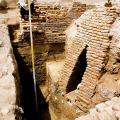
Drain, Harappa

Excavated by the Harappa Archaeological Research Project in 1993, this large corbelled drain was built in the middle of an abandoned gateway at Harappa to dispose of rainwater and sewage. >

"Priest King"

Seated male sculpture, or "Priest King" from Mohenjo-daro (41, 42, 43). Fillet or ribbon headband with circular inlay ornament on the forehead and similar but smaller ornament on the right upper arm. The two ends of the fillet fall along the back an… >

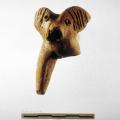
Ram figurine

Terra cotta ram figurine from Harappa. Such figurines may represent sacrificial animals used in specific annual rituals. Harappa Archaeological Research Project. >

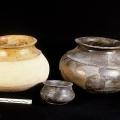
Cooking pots, Nausharo

Ledge shouldered cooking pots with low neck and flaring rim. One vessel has red slip on the neck and rim, while the other is fired grey-black. A small black fired bowl is seen in the foreground. Period III, Harappan, 2300-2200 B. C. Material: ter… >

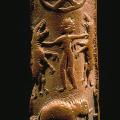
Molded tablet

Plano convex molded tablet showing a female deity battling two tigers and standing above an elephant. A single Indus script depicting a spoked wheel is above the head of the deity. On the reverse (89), an individual is spearing a water buffalo wi… >

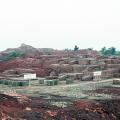
Mohenjo-daro Lower Town: Main Street HR/VS area and stupa view

  • Mohenjo-daro Lower Town: Main Street HR/VS area and stupa view

Standing in HR area and looking northwest at the juncture of Last Street (east west) and First Street (north south). VS area is seen on the other side of the street and the stupa mound rises in the background. Stacks of mud bricks are waiting to be … >

Looking out from inside the drain

  • Mohenjo-daro, Looking out from inside the drain

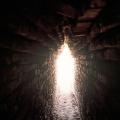
The corbelled arch drain from the great bath is large enough to walk into. It has a small ledge on either side of the actual drain channel. >

Toilets, HR area

  • Mohenjo-daro, Toilets, HR area

Two structure with a hole and drain located are thought to have been toilets. While these two structures may have been unique examples of toilets, most people would have used old pots set into the ground as commodes. >

Blocked Street to the east of First Street, DK-G Area

  • Mohenjo-daro, Blocked Street to the east of First Street, DK-G Area

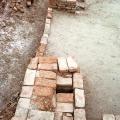
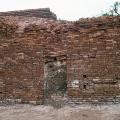
The excavations of DK-G area focused only on the section to the west of First Street. Unexcavated streets and houses lie to the east of First Street, waiting for a day when archaeologists have learned how to better preserve the fragile brick structu… >

Pagination

  • First page
  • Previous page
  • Page 1
  • Page 2
  • Page 3
  • Page 4
  • Page 5
  • Page 6
  • Page 7
  • Page 8
  • Page 9
  • …
  • Next page
  • Last page
© Harappa.com 1995-2026 31