Home

Main navigation

  • home
  • slides
  • essays
  • articles
  • books
  • video
  • q & a
  • blog
Secondary menu
  • about us
    • scholars
    • privacy
    • support
    • image rights
    • credits
    • contact us
  • resources

Ancient Indus questions answered by Dr. Jane McIntosh. She earned her Ph.D from Cambridge University and is author of numerous books including The Ancient Indus Valley: New Perspectives and A Peaceful Realm The Rise and Fall of the Indus Civilization.

8. Was the Indus trade effort centralised?

Jane McIntosh

The people of the Indus valley seem to have exported many more goods than they seem to have imported. Moreover, imported items like silver (found mainly in Harappa and Mohenjodaro) did not seem to have been distributed beyond the main cities suggesting that there was little demand for the goods in the smaller centres. Does this suggest that, if, as has been suggested, the Indus people took the initiative for the trade, this was a centralised effort that profited only the cities? Submitted by Apoorva Bhandari

9. Have any artifacts been found with discernible ancient fingerprints?

Jane McIntosh

Or ever two distinct artifacts with the same sets of fingerprints on them? Is there anyone studying indus valley artifacts with this approach and is there anything we can tell from it? Submitted by Ezb

Jane McIntosh
I am not aware of any studies specifically dealing with fingerprints on Harappan pottery. Kenoyer notes that some of the Ravi-period (pre-Harappan) beads at Harappa were decorated with finger marks.

18. Why did the Harappans go to such extraordinary lengths and distance to obtain raw materials such as copper?

Jane McIntosh
Richard H. Meadow
Shereen Ratnagar
Rita P. Wright

Why (as far as I know) was all the chert obtained from the Rohri Hills and distributed everywhere else? What does this tell us about the nature of the Harappan economy and society? Submitted by Gharial Abramnova from school student questions

25. Was feminine beauty exemplified by a race different than the one inhabiting the IVC?

Jane McIntosh
Shereen Ratnagar
Rita P. Wright

A stark contrast between the features of human figurines and masks of IVC period strikes me. Men have a narrow sloping forehead like a Neanderthal, whereas women exhibit a prominent vertical forehead with a much higher hairline. If my observation stands scrutiny, one possibility that comes to mind is that: Feminine beauty was exemplified by women of a race other than the one inhabiting the IVC. Somewhat like all Barbie dolls possess long limbs irrespective of which race they are supposed to represent. Does that hypothesis make sense? Submitted by Vasant Dave

17. What is your considered opinion on how and why the Indus valley civilization came to an end?

Jane McIntosh
Richard H. Meadow
Shereen Ratnagar
Rita P. Wright

Submitted by Manzoor

Jane McIntosh
I don't think that there was a single cause of the Indus civilization's end; rather it was the cumulative effect of a number of factors:

28. Was drug-smoking prevalent in the Indus Valley Civilization?

Jane McIntosh
Richard H. Meadow

Last year I visited gallery of Harappan Civilization at the National Museum, New Delhi. Among the artifacts, I saw a small 'chillum' (hand-held twin pipe) similar to that 'sadhus' (wandering Hindu monks) use in smoking 'charas' (hand-made hashish) and 'ganja' (marijuana). Discussing the history of cannabis, the Wikipedia quotes that charred cannabis seeds were found in a 3rd millenium BC grave in Romania. Submitted with illustration by Vasant Dave

30. Was there something mysterious that provided balance to Mesopotamian-IVC trade?

Jane McIntosh
Shereen Ratnagar
Rita P. Wright

Trade between Indus Valley and Mesopotamia appears rather skewed in IVC's favour. IVC exported Gold jewelery, Ivory seals & boxes, Timber, Cotton textiles, Copper & bronze fish-hooks, Carnelian & precious stone beads, Live chicken, Shell & bone inlays, and even Water buffaloes. Mesopotamia exported only Silver, Tin and Copper ingots, Woollen textiles and Bitumen. Could it have been be sex trafficking from Ur, Dilmun and Magan to Sutkagen Dor, Sokhta Koh, Balakot and Allahdino?

31. What is the best thing that could happen to ancient Indus studies?

Iravatham Mahadevan
Jane McIntosh
Richard H. Meadow
Shereen Ratnagar
Rita P. Wright

Jane McIntosh
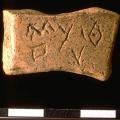
Decipherment of the Indus script would be helpful – if nothing else, it should conclusively settle the non-Aryan/Aryan dispute – but the amount of information this would yield is severely limited.

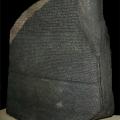
37. If you had to place money on where a future Rosetta stone with inscriptions in the ancient Indus language and another language might be found, where would you bet?

Iravatham Mahadevan
Jane McIntosh
Richard H. Meadow
Shereen Ratnagar
Rita P. Wright

Jane McIntosh

42. What is current thinking on the female diety with outstretched arms in the ancient Indus, Egyptian and Mesopotamian cultures?

Iravatham Mahadevan
Jane McIntosh
Richard H. Meadow
Rita P. Wright

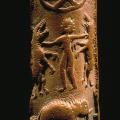
There is an image common to the Indus, Ancient Egyptian and Mesopotamian river cultures of a female deity standing with arms outstretched, holding two apparently deadly animals at bay. In the case of the Indus, the animals have been identified as 'tigers', in Ancient Egyptian and Mesopotamian they are crocodiles. What are the current theories on the iconography(ies) of these images; the reasons for their presence in three civilizations and what their presence might indicate in terms of the interrelationships between these cultures? Submitted by Ian Whitney

Pagination

  • Page 1
  • Page 2
  • Next page
  • Last page
Answers by Author (6)
  • Asko Parpola
  • Iravatham Mahadevan
  • Jane McIntosh
  • Richard H. Meadow
  • Rita P. Wright
  • Shereen Ratnagar
© Harappa.com 1995-2026 31