Home

Main navigation

  • home
  • slides
  • essays
  • articles
  • books
  • video
  • q & a
  • blog
Secondary menu
  • about us
    • scholars
    • privacy
    • support
    • image rights
    • credits
    • contact us
  • resources

Iravatham Mahadevan

Ancient Indus questions answered by Iravatham Mahadevan, Indus Research Centre, Chennai. Iravatham Mahadevan was India's leading expert on the ancient Indus script, is author of The Indus Script: Texts, Concordance and Tables. He has numerous articles on this website, as well as the essays The Indus Script and The Arrow Sign in the Indus Script.

26. What is the evidence for specific religious practices in the IVC?

Iravatham Mahadevan

1. Are there any findings which can possibly hint to the origin of Tantra in the IVC?
2. Which religions where practiced in the IVC and are there indications that the IVC had atheistic influences (esp. Samkhya)?
3. Are there any new discoveries about the Shiva/Cerunnos seals and is it right to suppose that it is depicting Shiva sitting in a Yôga pose?
Submitted by Christoph Dressel

27. How did Harappans measure value?

Asko Parpola
Iravatham Mahadevan
Richard H. Meadow

How did they "pay"? I have often wondered how this took place in practice, assuming there was no currency as we understand it. How were luxury / prestige items such as gold and gemstone jewelery obtained by those who had access to them. How did ordinary people trade and obtain necessities and adornments, eg pots, cloth, food, bangles and everyday jewelery? What was the role of the rulers?

22. Is there any evidence showing any connection to the Vedic Gods, such as Mithr (Mihr, Mehr, Mir)?

Iravatham Mahadevan
Shereen Ratnagar

Submitted by Steve

Shereen Ratnagar
No way of knowing—but the Vedas are centuries later. I do not find much attraction in theories that conjure up Brahmanical deities, even later Puranic deities, in connection with Harappan images. We require a modicum of “chronological discipline”(—let us choose a better term for this in our discussions).

31. What is the best thing that could happen to ancient Indus studies?

Iravatham Mahadevan
Jane McIntosh
Richard H. Meadow
Shereen Ratnagar
Rita P. Wright

Jane McIntosh
Decipherment of the Indus script would be helpful – if nothing else, it should conclusively settle the non-Aryan/Aryan dispute – but the amount of information this would yield is severely limited.

39. Have we found any 'writing instruments' that could have been used to paint or etch materials?

Iravatham Mahadevan

As Iravatham Mahadevan points out, archaeological evidence makes it inconceivable that IVC's large, well-administered and sophisticated trading society would have functioned without effective long-distance communication. Unlike the clay tablets of Mesopotamia, no written records were discovered from Indus Valley sites except seals. The people of IVC might have written on cotton cloth, leaves, bark or hide which would have decayed by now, leaving no trace.

41. Is there new evidence to further support the 'min' (star/fish) decipherment theory?

Iravatham Mahadevan

Submitted by Richard Sproat

37. If you had to place money on where a future Rosetta stone with inscriptions in the ancient Indus language and another language might be found, where would you bet?

Iravatham Mahadevan
Jane McIntosh
Richard H. Meadow
Shereen Ratnagar
Rita P. Wright

Jane McIntosh

48. A case has been made for the late Harappans being the Vedic Aryans. What is your view?

Iravatham Mahadevan
Shereen Ratnagar
Rita P. Wright

This case is being made on the basis of circumstantial evidence. Did the people of Indus Valley Civilization interact with people of the Rigveda? What is the relationship between the Indus Valley people and Vedic people? Submitted by Shubha Khandekar and others

40. Are there any connections between irrigation systems in South India and the IVC?

Iravatham Mahadevan

I would also like the experts to throw some light on the irrigation systems prevalent in South India, especially in Kerala till the middle of this century, where system of open channels linking ponds were prevelant. Ponds again were small types for domestic use and bigger ones for agriculture in addition to deep wells for drinking water and the entire system was integrated part of the village life which appears common with what existed in Harappa and IVC.
Submitted by Prakash Pk

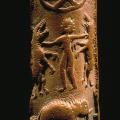
42. What is current thinking on the female diety with outstretched arms in the ancient Indus, Egyptian and Mesopotamian cultures?

Iravatham Mahadevan
Jane McIntosh
Richard H. Meadow
Rita P. Wright

There is an image common to the Indus, Ancient Egyptian and Mesopotamian river cultures of a female deity standing with arms outstretched, holding two apparently deadly animals at bay. In the case of the Indus, the animals have been identified as 'tigers', in Ancient Egyptian and Mesopotamian they are crocodiles. What are the current theories on the iconography(ies) of these images; the reasons for their presence in three civilizations and what their presence might indicate in terms of the interrelationships between these cultures? Submitted by Ian Whitney

Pagination

  • Page 1
  • Page 2
  • Next page
  • Last page
Answers by Author (6)
  • Asko Parpola
  • Iravatham Mahadevan
  • Jane McIntosh
  • Richard H. Meadow
  • Rita P. Wright
  • Shereen Ratnagar
© Harappa.com 1995-2026 31