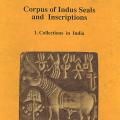
Volume 1 of the most comprehensive listing of ancient Indus seals, covering those in Indian collections, many found in Mohenjo-daro and Harappa before Independence. >
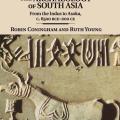
Robin Coningham (Durham University) and Ruth Young (University of Leicester) offer a critical synthesis of the archaeology of South Asia from the Neolithic period (c.6500 BCE), when domestication began, to the spread of Buddhism accompanying the Mauryan Emperor Asoka's reign (third century BCE). >
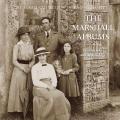
This volume explores multiple perceptions of Indian history and scholarship produced through archaeological fieldwork and related photography during the colonial period. The focus is on John Marshall, the man who really made the Archaeological Survey of India the formidable player it became in the reconstruction and preservation of Indian history. He announced and fostered the discovery of the ancient Indus civilization, even as the hard work on the ground was done by a handful of Indian archaeologists. >
Father tongue, mother land: The Birth of Languages in South Asia is a natural successor to Wanders, Kings, Merchants, taking on perhaps the biggest puzzle in Indian language history: what di… >
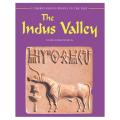
Provides an introduction to the Harappa people who lived in the Indus Valley thousands of years ago, describing their civilization, daily life, religious beliefs, and more. >
In an attempt to examine Harappan diet and environment, this book draws on analyses of archaeological plant materials from Rojdi, Gujarat (3500BC to 2000BC) to explore subsistence patterns and environmental change within a socioeconomic framework. >
A key two volume text by a noted Indian archaeologist detailing the excavations at the Harappan port town of Lothal in Gujarat. Well-illustrated with maps, diagrams and hundreds of photographs. >
Being an official account Archaeological Excavations at Mohenjo-daro carried out by the Government of India between the years 1927 and 1931. A 2 volume work by one of the key site excavators. >