Over 500 pages of great insight and new data reveals the quiet and powerful role of bioarchaeology in Indus studies. Bioarchaeology is by one of its first practitioners, as "the reconstructions of past people's lives based on a multidisciplinary analysis of archaeological human remains. Bioarchaeology is one of the few fields of inquiry that emphasizes integration of three subdiscipines of anthropology: biological anthropology, archaeology, and sociocultural anthropology." >
Being an Account of Archaeological Excavations at Harappa carried out between the Years 1920-1921 and 1933-34 Results from early excavations at Harappa. >
Taya has risen from humble roots to become a fire seer in the Coalition of Mages. Eager to prove herself, she arrives in the town of Harappa to locate a “jackal”—a mage operating outside the Coalition’s authority—who has murdered three people. >
An important collection of over 50 (!) essays on all aspects of the Indus civilization, by numerous luminaries in the field, covering everything from terminology to materials, class structure, script and art. >
These collected papers by leading international authorities on South Asian archaeology present material which may surprise the archaeological community and perhaps startle the educated laymen. Includ… >
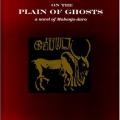
Winter on the Plain of Ghosts is an epic story of sorcery, religious conflict, political intrigue and ecological disaster in the lost cities of the Indus Valley. >
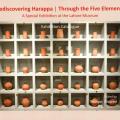
This superb catalogue is available below as a free PDF (6.6 MB), and is described in greater detail in this blog post An Awesome Indus Exhibition Catalogue. >
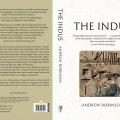
There are almost no concise, up-to-date accounts of the ancient Indus civilization, locating the latest facts and opinions within a larger intellectual context. Has the Indus script been deciphered? What can we say about the relationship of ancient Indus traditions and modern Hinduism? How did Indus society compare to contemporary Bronze Age Egypt and Mesopotamia? Why do so many questions remain open and so contentious? >
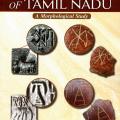
This volume, sub-titled A Morphological Study represents a significant contribution to the study of ancient Indian scripts and cultural connections. The extensive documentation and classification of Tamil Nadu graffiti alone constitutes a valuable scholarly resource. >