The detailed and highly informative excavation reports from the only American-sponsored pre-partition Indus excavations at this manufacturing site in Sindh. Available online. >
The rise and origins of urbanization in India, Pakistan and Nepal is discussed in this work by scholars in a wide range of disciplines with three important essays that deal with Indus urbanization. >
The 1972 book detailing the first excavations at Lothal by S.R. Rao, the discoverer in of the site in 1954. With some good and important albeit black and white illustrations. Foreword by Sir Mortimer… >
This is a very important book by two scholars who have spent years studying ancient Mesopotamian cultures (Steinkeller, Harvard University) or leading explorations of more recently discovered Gulf Arab cultures (Laursen, Moesgaard Museum Denmark). >
This is an unusual book, a combination of two types of work. One is the record of a trip along the Makran coast of Baluchistan when Pakistan was a new country with a fledgling archaeology department splintered from the Archaeological Survey of India. The second is the excavation record at Sutkagen Dor, the westernmost known ancient Indus site. >
This Supplemental Volume to the Cambridge History of India is an outdated (1968) but rigorously argued synthesis by a pioneering British archaeologist. With some nicely done plans and cross-sections. >
The Fall of Shuruppak traces the adventures of our hero, Upaas, as he travels to summer with sage Vasishta and his friend Shushun. Follow the daredevil physician as he fights his way through… >
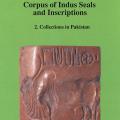
Volume 2 of the most comprehensive listing of ancient Indus seals covers collections in Pakistan, including many seals found in Harappa and Mohenjo-daro before Independence. >