
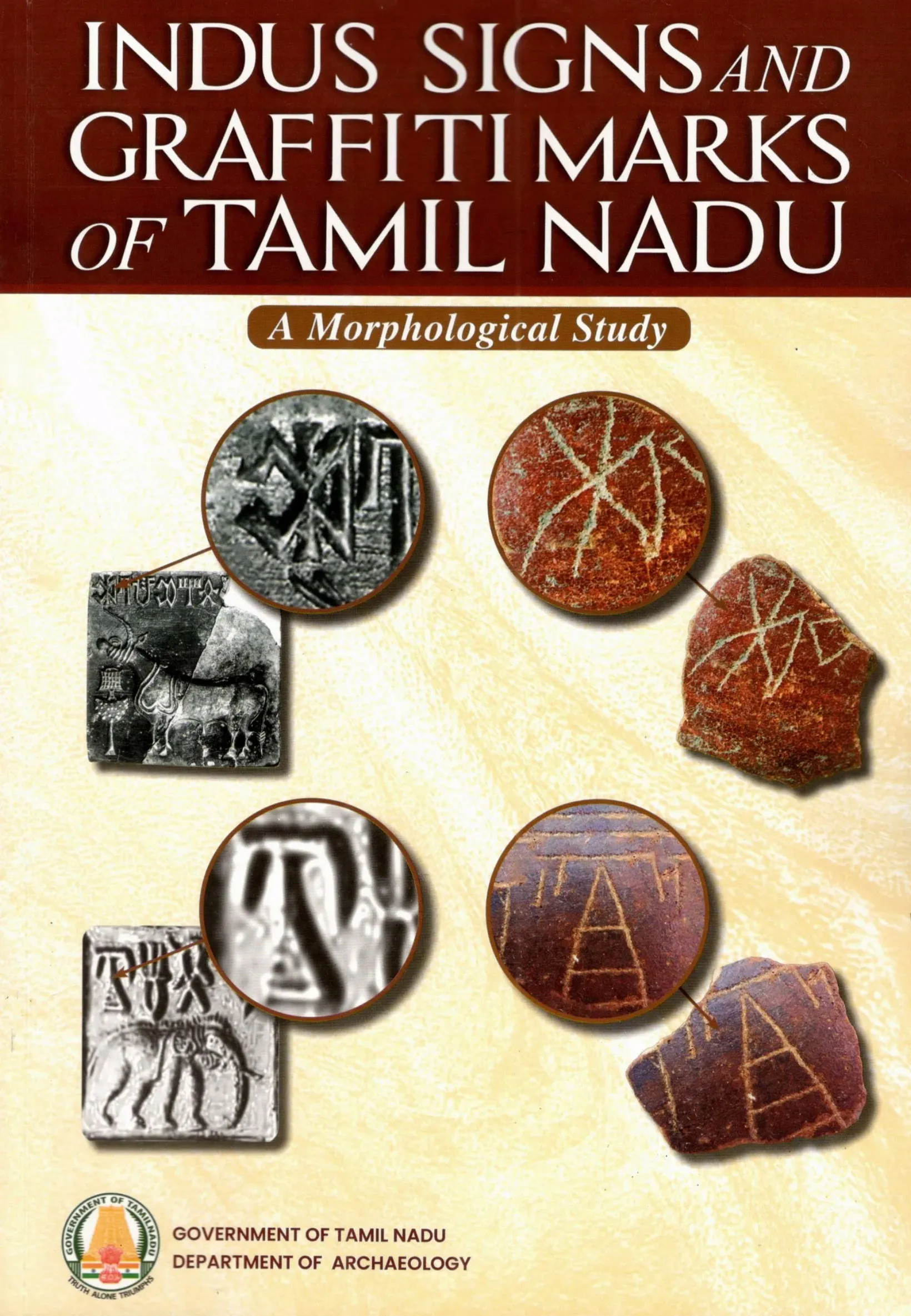
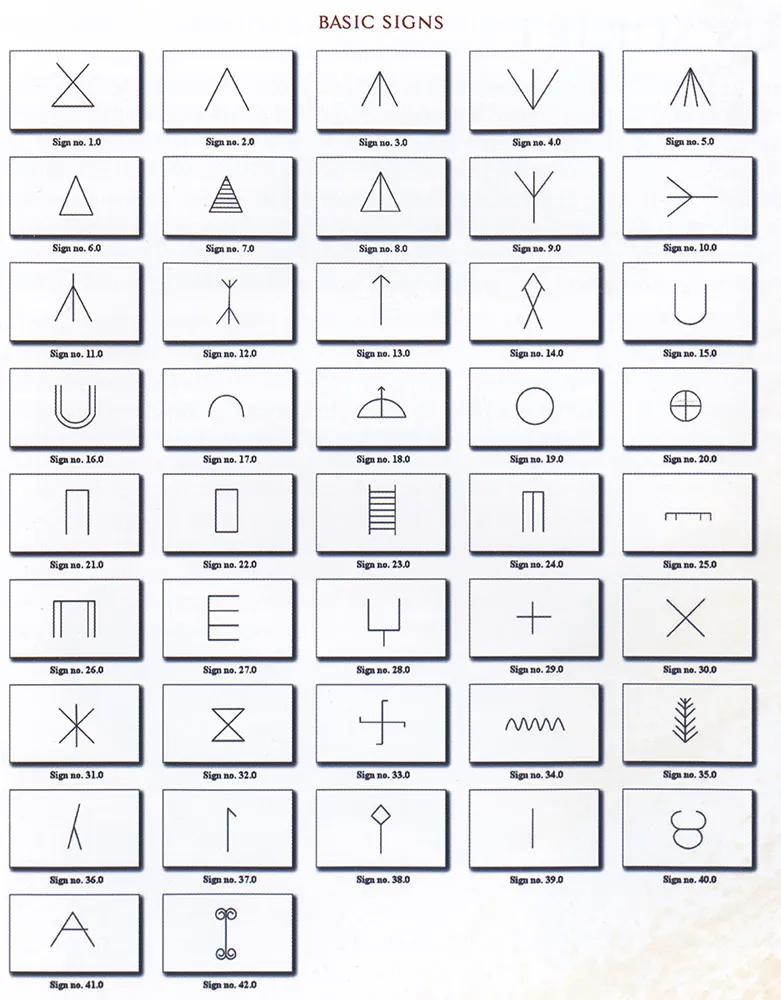
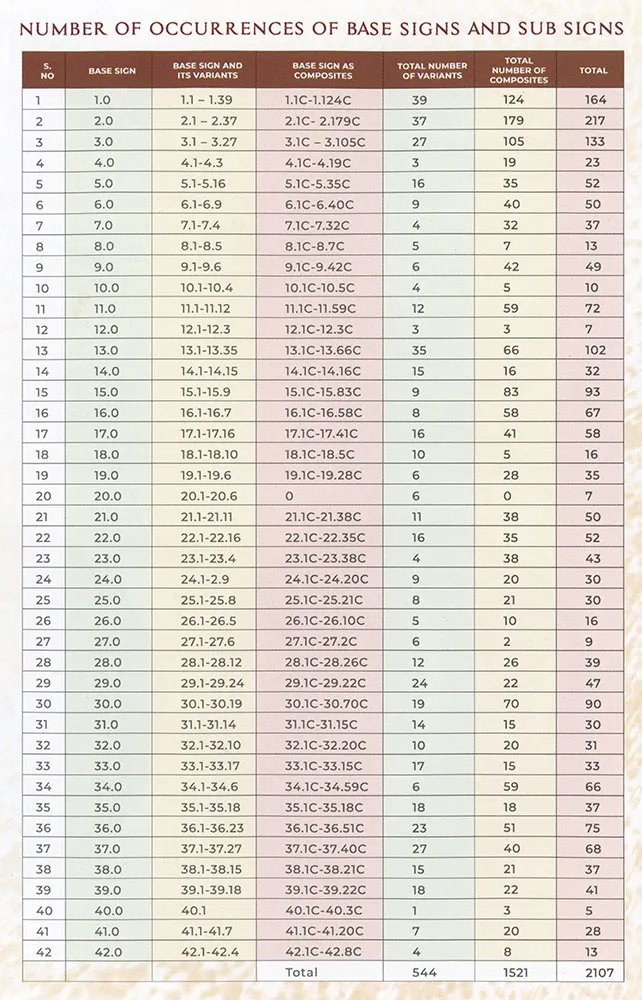
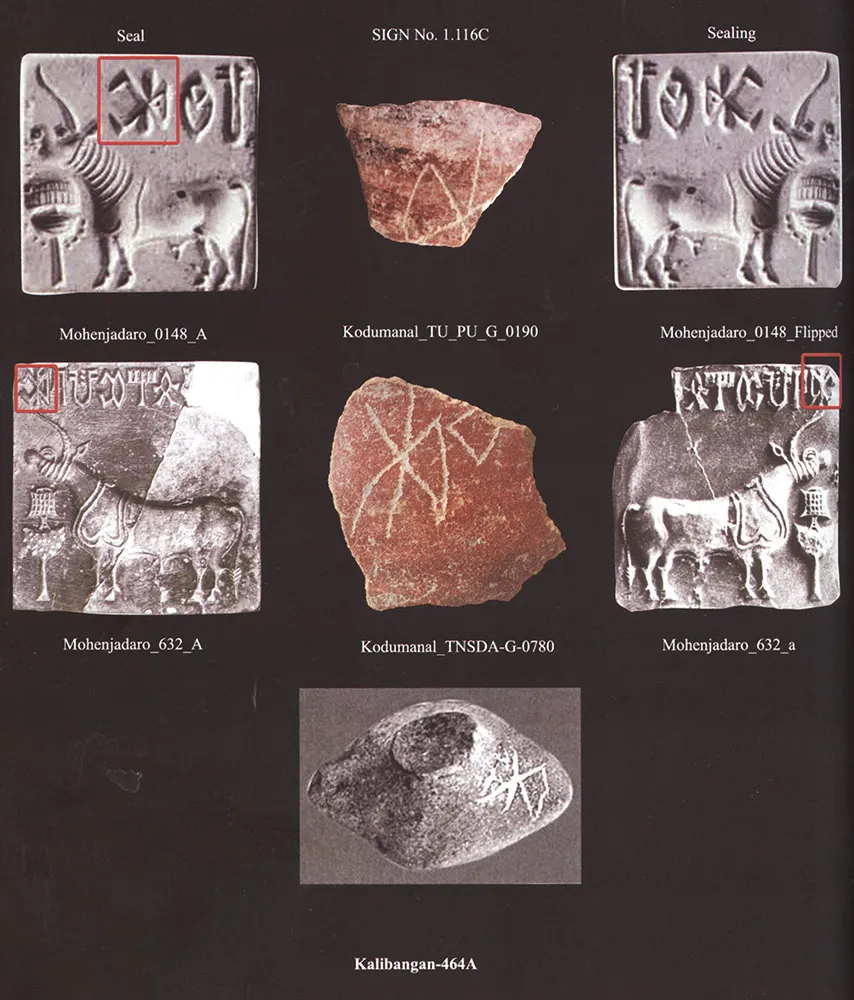
This volume, sub-titled A Morphological Study represents a significant contribution to the study of ancient Indian scripts and cultural connections. The extensive documentation and classification of Tamil Nadu graffiti alone constitutes a valuable scholarly resource. One of the best things about the volume is that the reader can look at the many images and make up their own mind as to the proposed connections between these marks and ancient Indus signs as found on seals and graffiti. The authors believe that 90% of the over 15,000 graffiti-bearing potsherds analyzed from Tamil Nadu have parallels with Indus signs, which they break into 42 base and sub-signs, of which they say 60% "found their parallels in the Indus script," (see Images 2 and 3 above for these 42 signs). One might add that this is not an aberrant approach; it is clear that the ancient Indus signs we know from seals and tablets had their own origins in similar graffiti on pottery in Harappa and Mohenjo-daro (see Origin and Development of the Indus Script: Insights from Harappa and other sites by Jonathan Mark Kenoyer for example).
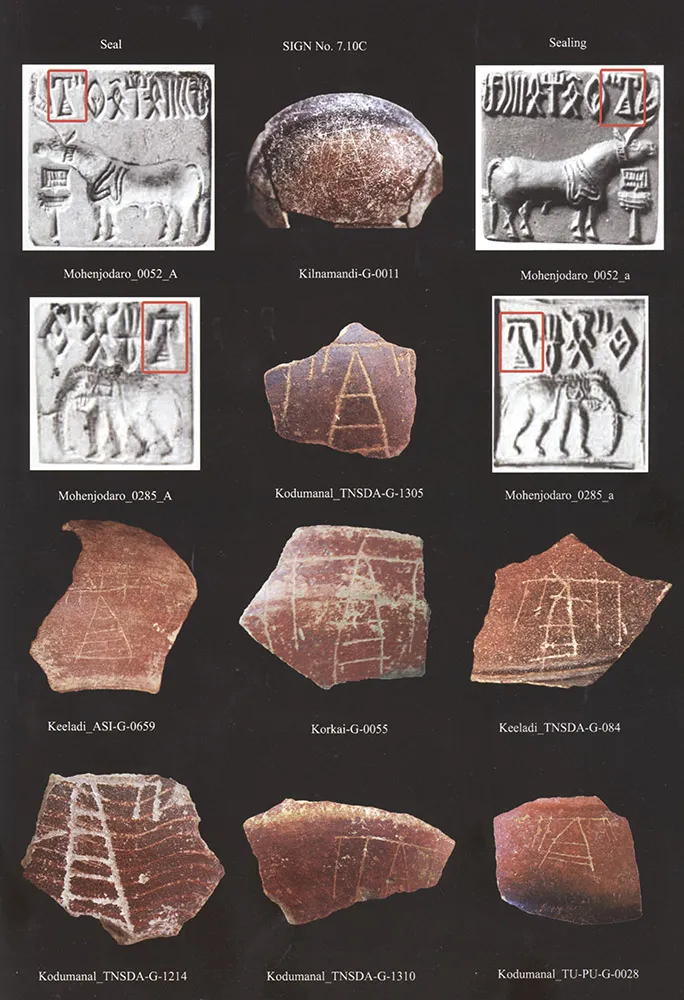
One might quibble about the concordance with seal images that are sometimes not so very clear (and comparing seals and graffiti is tricky). There is also the issue that basic geometric shapes – V-shapes, crosses, double lines and so on – are likely to be used and scratched into pottery by different people at different times (correlation is not causation). Nonetheless, there are many examples where the congruence is remarkable (see images 4 and 5 above for examples). There are varying degrees of similarity of course and the reader is free to judge, yet many of the potentially similar signs are among the more common ones known from Indus sites, like the fish or even svastika signs, which would support the author's conclusion that they could be related to Indus signs. At the very least, there is a lot of circumstantial evidence here that should make the reader pause and take seriously the possibility of connections across wide ranges of time and space.
What does other evidence say about possible connections? The substantial temporal gap between the civilizations (a good thousand years) remains a significant challenge to their hypothesis of direct connection. Many of the potsherds from Tamil Nadu are without clear dates, although other evidence from sites suggest a wide range from roughly 2500 BCE (just as Indus cities were reaching their height) to something closer to 1000 BCE. The authors use well-known arguments by Iravatham Mahadevan, Asko Parpola, R. Balakrishnan and others to describe the possible Dravidian language connections between the Indus script and these inscriptions to frame their arguments. Theirs is an inter-disciplinary approach, which together with the robust data set makes for a compelling argument. Nor does one need to assume that Dravidian language speaking people migrated southwards only after the decline of Indus cities 1900-1700 BCE; linguistic analysis and DNA analysis suggests that such people could well have been moving in smaller groups into South India during Indus times. After all, if Indus people were active in the Gulf and Mesopotamia at the end of the 3rd millennium, why not in the much more contiguous parts of the subcontinent from where they could source items like gold?
It should also be noted that similarities between signs do not mean the people who produced the signs were the same of course, and the authors do not say this; there are more than enough examples in South Asia of using different languages and writing or sign systems in different contexts by different people.
As with any groundbreaking research, thorough peer review and replication of results by other scholars will be crucial to validate the potentially exciting findings shared in this volume. Continuing archaeological excavations at sites like Keeladi, Adichanallur, and Sivagalai may eventually help bridge the chronological gaps in our understanding. A deeper analysis of this graffiti compared to graffiti (not seals) from Indus cities may also open up new avenues of research and perhaps one day help in deciphering the signs if further connections with the vessels or what they possibly contained can be determined. With a database this size, statistical analysis of signs and their frequencies vs. their possible counterparts in the ancient Indus corpus should be possible. And what about graffiti on pottery in Karnataka, Maharashtra or Gujarat and elsewhere along the path that migrants or artisans of whatever sort may have used? Even if similarly extensive excavations have not been done, are there are similar signs found in those areas as graffiti? None of this is to detract from the enormous value of this work.
K. Rajan and R. Sivanantham's have made an exceptional contribution to ongoing scholarship on the ancient subcontinent while reminding us that as the full story of those times slowly emerges, it will be full of surprises (one of them seems to be that ancient people were far more mobile than we usually presume). The fact that they also put so much data into the public sphere is an enormous achievement, and should inspire many more researchers and future discoveries.