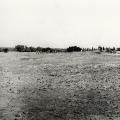
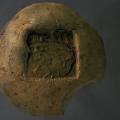
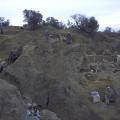
"The mound was covered with potsherds and brick bats, but no brick foundations were visible anywhere that might have served as a starting point." - Daya Ram Sahni, Annual Progress Report of the Archaeological Survey [of India], Hindu and Budd…>
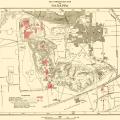
This map of Harappa was published by Madho Sarup Vats in his 1941 monograph on Harappa Excavations at Harappa: Being an account of archaeological excavations at Harappa carried out between the years 1920-21 and 1933-34. Volume I - Text; Volume I…>
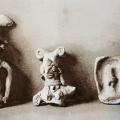
[This and the next full page in the Sept. 20, 1924 issue were printed in sepia, preserved here in the images. This complete text across both full pages is given below.] WITH HEADDRESSES RECALLING THE MEDIAVAL FASHIONS IN EUROPE: FIGURINE… >
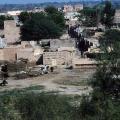
A view of modern Harappa city which is built on top of a large portion of the ancient mound. Many of the streets and houses of the modern town are built directly above earlier streets and houses of ancient Harappa. >
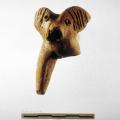
Terra cotta ram figurine from Harappa. Such figurines may represent sacrificial animals used in specific annual rituals. Harappa Archaeological Research Project. >
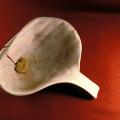
Large ladle found with burial pottery in a disturbed burial of the Harappan cemetery. Shell ladles were probably used in special rituals for dispensing sacred liquids such as water or oil. A hole in the bottom of the ladle has been repaired with a l… >
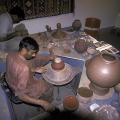
Mohammad Nawaz, master potter from Harappa, demonstrates how fish scale and intersecting circle motifs may have been painted onto Harappan pottery. Here he is demonstrating at the Elvehjem Museum of Art in Madison, Wisconsin, USA during the major ex… >
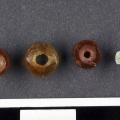
These beads from the Ravi Phase (3300-2800 BCE) at Harappa have been made from carnelian and amazonite (right hand bead). The raw material used to make these beads was brought to the site from source areas probably in Gujarat, over 900 km to the sou… >
This Early Harappan seal impression or sealing of a square seal has several script signs and two ladder like motifs (Kot Diji Phase, c. 2800 BCE). The wet clay was probably placed on a bundle of goods to seal it and then was broken off when the bund… >
Overview of Trench 39 North, looking at the Harappan and Late Harappan Period levels. The brick wall is part of a large building that was constructed with wooden beams and columns. In the foreground is a doorway and in the left background is an earl… >