Harappa

Harappa, Punjab ancient Indus civilization excavations, figurines, seals and other objects.

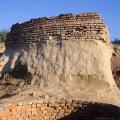
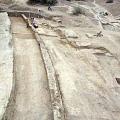
The Trench 11 area showing the perimeter wall (on the left), the curtain wall, and the Period 3C drain that cut deeply into the Period 3B deposits (see the labeled plan in 72). The sediments outside of the perimeter wall are hard packed ashy debris… >

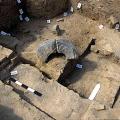
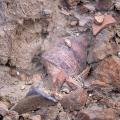
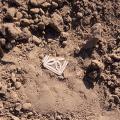
To the Northeast of the area shown in Image 449, the remains of a broken ringstone were found in the upper fill just to the North of the northern wall of a room. (See plan in 85.) This is reminiscent of the broken ringstones found on Mound AB (6… >

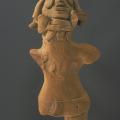
The hair of male figurines is sometimes bound into a sort of folded bun or mounded on top of the head and secured by a headband or a fillet. The hair may be painted black and sometimes also has a punctate decoration. Approximate dimensions (W x … >

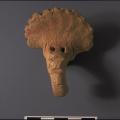
It is unknown whether elephants were domesticated in the Indus Civilization. However, one of the few elephant figurines from Harappa is a head with large stylized ears and red and white stripes painted across the face. This may mirror the custom of … >

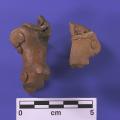
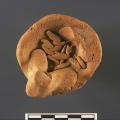
A circular terracotta platform or container with many small lozenges, possibly representing grain, between the flattened broken feet of two birds perched on opposite sides of the container provides another possible example of the keeping of birds by… >

The foreground well is only one of eight wells, public and private, that have thus far been discovered at Harappa. Most of the water used by the population probably came from the adjacent Ravi River. The curved wall was probably a large drain used d… >

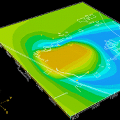
The paleotopography represents the pre-occupation topography as it may have existed about 5000 years ago. There may be some areas in the paleotopographic model that may not represent the actual paleotopography, but rather subsequent anthropogenic in… >