Harappa

Harappa, Punjab ancient Indus civilization excavations, figurines, seals and other objects.

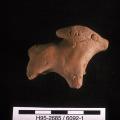
Some animal figurines with long ears, especially those with the ears laid back against round hollow bodies, have been identified as hares. One animal figurine with long ears laid back above a small solid body may also represent a hare. Figurines wit… >

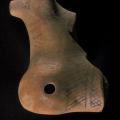
A small subset of the figurines from Harappa originally had wheels. Of the many small terracotta wheels found at Harappa, at least some must have been intended for these wheeled objects. One style of wheeled figurine has lateral holes for the axles … >

No grain, storage containers or clay sealings such as would have been attached to goods for shipment were found in the so-called "Granaries" of Harappa or Mohenjo-daro. Archaeologists today prefer to call these structures great halls, since they wer… >

No "Great Bath" like that in Mohenjo-daro has been found in Harappa, and it is not known if one existed among the miles of ruins carted off for railway construction in the early 1850's. A large bath does however exist very near the mounds, construc… >

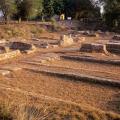
View of Pit I, Mound AB. Sahni: ‘The only structures reclaimed in pit I were two cells occurring at the depth of 3’ and 10’ respectively, which might have been kitchens or baths, and a well preserved drain composed of brick with a gabled roof …”… >

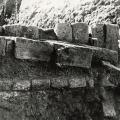
Published in ARASI 1924-25, Plate XXIV (a). Caption: Harappa: Mound F, A burial structure resembling a modern samadhi unearthed in Trench A (e) . Described by Sahni as: "a horizontal platform of a single course of bricks laid flat and pr… >

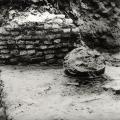
Published in ARASI 1924-25, Plate XXV (c). Title: ‘Mound B, Brick Platform with Cinerary Jar Placed Upon it Mouth Downwards’. The jar is recorded as “earthen urn (B. 1486).” All the remains laid below this level [mound B, Kushan or ea… >