Home

Main navigation

  • home
  • slides
  • essays
  • articles
  • books
  • video
  • q & a
  • blog
Secondary menu
  • about us
    • scholars
    • privacy
    • support
    • image rights
    • credits
    • contact us
  • resources

Toys of the Indus Valley

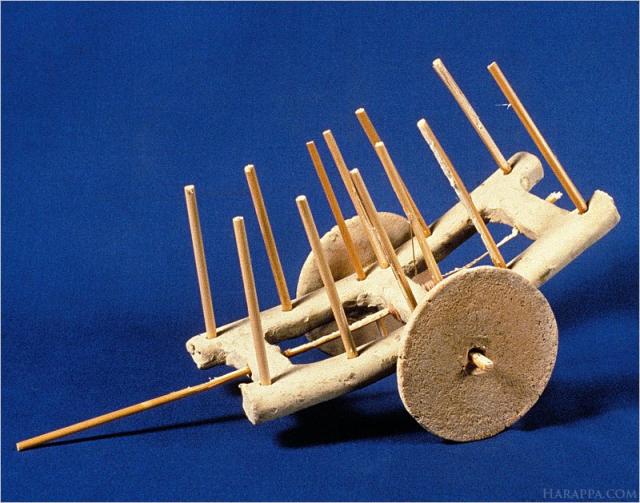
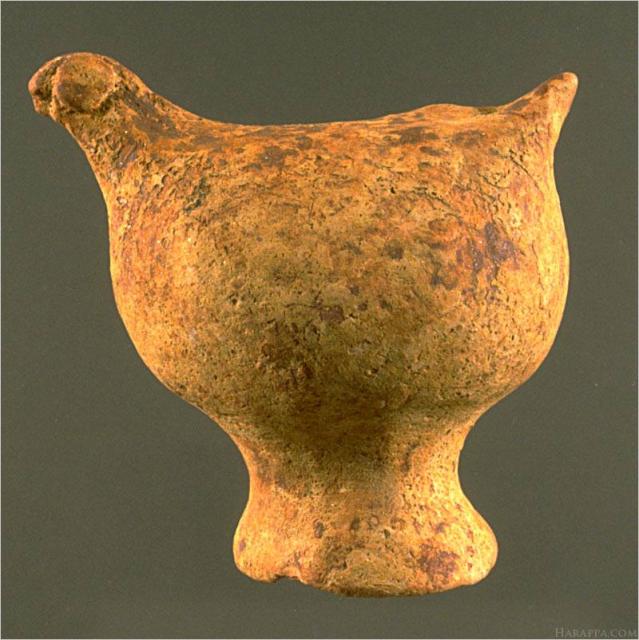
  • Approximate dimensions (W x H(L) x D): 7.2 x 9.4 x 3.0 cm. Photograph by Georg Helmes. Holes along the length of the cart serve to hold wooden side bars and at the center of the cart two of the wooden side bars can be extended below the frame to hold the axle. A long stick inserted into the holes at the end of the cart would have been used to support a yoke. The two wheels were found lying next to the cart frame. Period III, Harappan, 2300-2200 B. C. Similar carts are still used in rural areas of Pakistan and India. Among the most convincing cases for figurines as toys are the hollow bird figurines that have a hole either on the back near the tail or in front of the torso that allowed them to be used as whistles. Similar terracotta "bird whistles" are still found in South Asia. Approximate dimensions (W x H(L) x D): 3.8 x 5.5 x 5.3 cm. Photograph by Richard H. Meadow. Terracotta figurines have long been considered toys, often without question. Other objects such as carts, wheels, and charpoi (cots) made of terracotta at a similar scale may reinforce this interpretation for at least some of the terracotta figurines. Several styles of carts as well as wheels made of terracotta have been found at Harappa. These were probably originally held together by wooden components that have not preserved.
    Approximate dimensions (W x H(L) x D): 7.2 x 9.4 x 3.0 cm. Photograph by Georg Helmes. Holes along the length of the cart serve to hold wooden side bars and at the center of the cart two of the wooden side bars can be extended below the frame to hold the axle. A long stick inserted into the holes at the end of the cart would have been used to support a yoke. The two wheels were found lying next to the cart frame. Period III, Harappan, 2300-2200 B. C. Similar carts are still used in rural areas of Pakistan and India. Among the most convincing cases for figurines as toys are the hollow bird figurines that have a hole either on the back near the tail or in front of the torso that allowed them to be used as whistles. Similar terracotta "bird whistles" are still found in South Asia. Approximate dimensions (W x H(L) x D): 3.8 x 5.5 x 5.3 cm. Photograph by Richard H. Meadow. Terracotta figurines have long been considered toys, often without question. Other objects such as carts, wheels, and charpoi (cots) made of terracotta at a similar scale may reinforce this interpretation for at least some of the terracotta figurines. Several styles of carts as well as wheels made of terracotta have been found at Harappa. These were probably originally held together by wooden components that have not preserved.

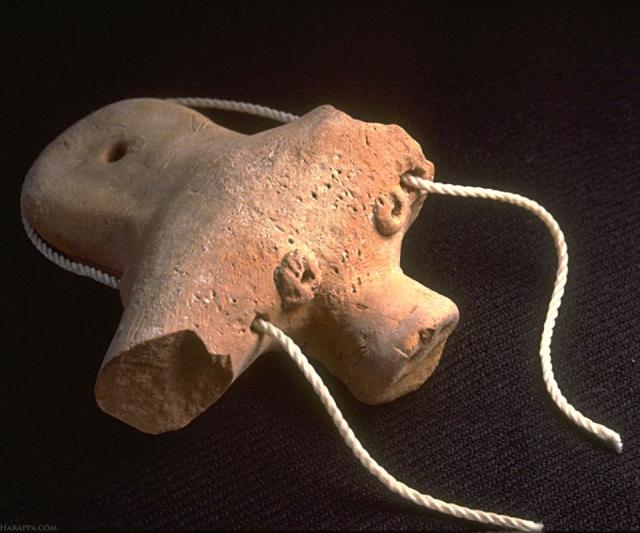
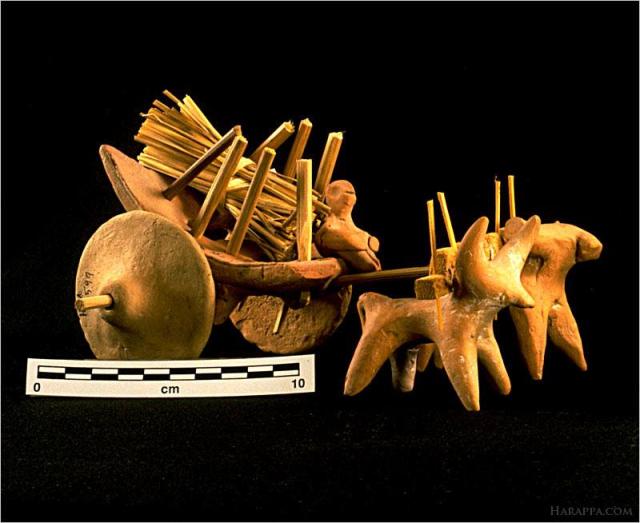
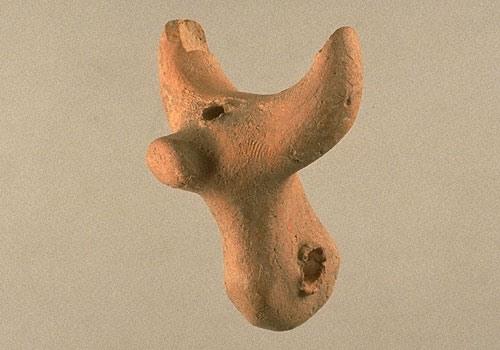
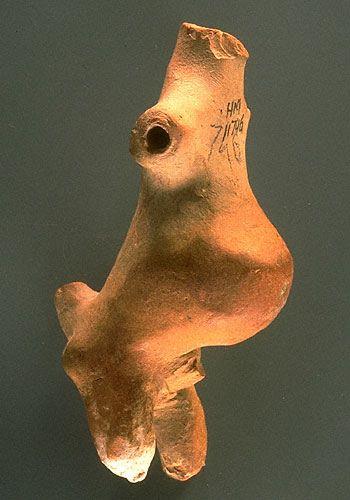
Movable head of a bovine figurine from Harappa. Some movable figurine heads are pierced through the horns on either side of the head. The movable heads of figurines often depict cattle. They are usually pierced laterally through the neck and vertically or sagittally through the head in order to secure them to the bodies and control them with a cord. Also a toy cart from Nausharo, a bird whistle and a complete ox or water buffalo cart with figurine.

Art
People

Blog Posts by Subject (16)
  • Animals
  • Art
  • Children
  • City Life
  • Conferences
  • Crafts and Industry
  • Evolution
  • Excavations
  • Food
  • Homes
  • Media
  • Museums
  • Mysteries
  • News
  • People
  • Seals
© Harappa.com 1995-2026 31