Home

Main navigation

  • home
  • slides
  • essays
  • articles
  • books
  • video
  • q & a
  • blog
Secondary menu
  • about us
    • scholars
    • privacy
    • support
    • image rights
    • credits
    • contact us
  • resources

Pipal Leaves: Revisited

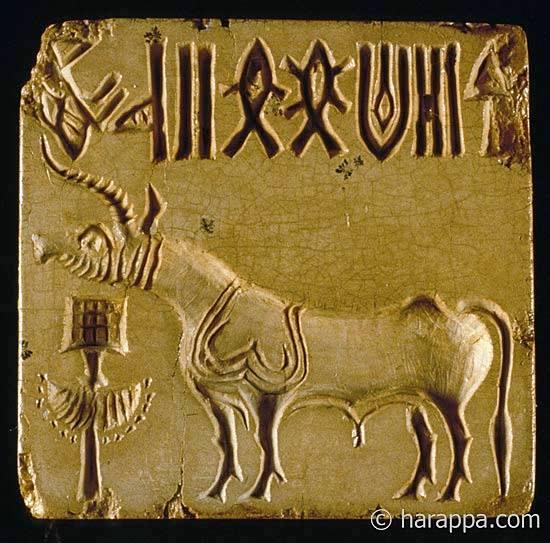
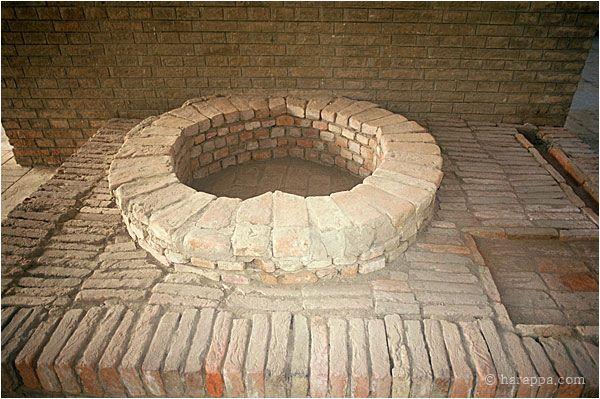
  • This unique well and associated bathing platform was discovered in the course of building a catchment drain around the site. It was reconstructed on the ground floor of Mohenjo-daro site museum. "The representation of plant forms on the seals is rare; they occur on only twelve seals . . . On only two seals is a plant form the central motif (Nos. 387 and 527). The plant on the former [shown here] has been identified as a pipal tree, which in India is the Tree of Creation. The arrangement is very conventional and from the lower part of the stem spring two heads similar to those of the so-called unicorn." [Marshall, Vol. III, p. 389] Large square unicorn seal from Mohenjo-daro. A relatively long inscription of eight symbols runs along the top of the seal. The elongated body and slender arching neck is typical of unicorn figurines, as are the tail with bushy end and the bovine hooves. This figure has a triple incised line depicting a pipal leaf shaped blanket or halter, while most unicorn figures have only a double incised line. The arching horn is depicted as if spiraling or ribbed, and the jowl is incised with multiple folds.(Kenoyer)
    This unique well and associated bathing platform was discovered in the course of building a catchment drain around the site. It was reconstructed on the ground floor of Mohenjo-daro site museum. "The representation of plant forms on the seals is rare; they occur on only twelve seals . . . On only two seals is a plant form the central motif (Nos. 387 and 527). The plant on the former [shown here] has been identified as a pipal tree, which in India is the Tree of Creation. The arrangement is very conventional and from the lower part of the stem spring two heads similar to those of the so-called unicorn." [Marshall, Vol. III, p. 389] Large square unicorn seal from Mohenjo-daro. A relatively long inscription of eight symbols runs along the top of the seal. The elongated body and slender arching neck is typical of unicorn figurines, as are the tail with bushy end and the bovine hooves. This figure has a triple incised line depicting a pipal leaf shaped blanket or halter, while most unicorn figures have only a double incised line. The arching horn is depicted as if spiraling or ribbed, and the jowl is incised with multiple folds.(Kenoyer)

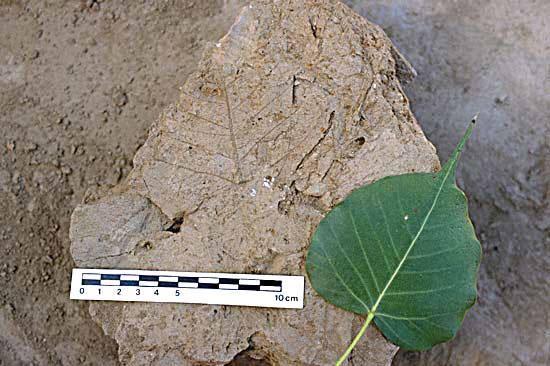
The impressions of a pipal leaf found in the upper clay levels of a drain in Harappa, shown here with a modern pipal leaf, indicate that what many think was a sacred tree was growing in the ancient city of Harappa even at that time. A well at Mohenjo-daro, a sealing from the city and the pipal motif on a unicorn seal are other examples of this critical motif in Indus culture.

See also Unicorn and Pipal Tree Seal.

Art
Seals

Blog Posts by Subject (16)
  • Animals
  • Art
  • Children
  • City Life
  • Conferences
  • Crafts and Industry
  • Evolution
  • Excavations
  • Food
  • Homes
  • Media
  • Museums
  • Mysteries
  • News
  • People
  • Seals
© Harappa.com 1995-2026 31