Home

Main navigation

  • home
  • slides
  • essays
  • articles
  • books
  • video
  • q & a
  • blog
Secondary menu
  • about us
    • scholars
    • privacy
    • support
    • image rights
    • credits
    • contact us
  • resources

Mohenjo-daro - City of Wells I

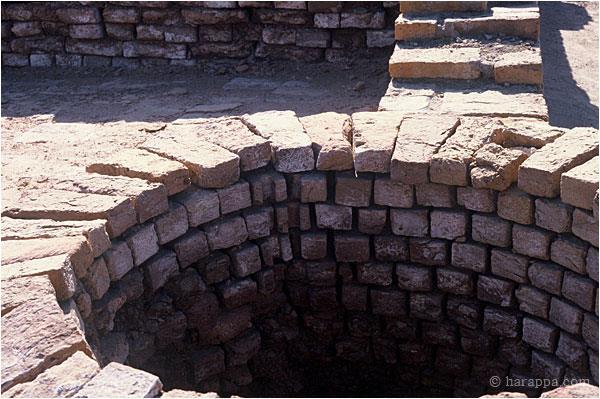
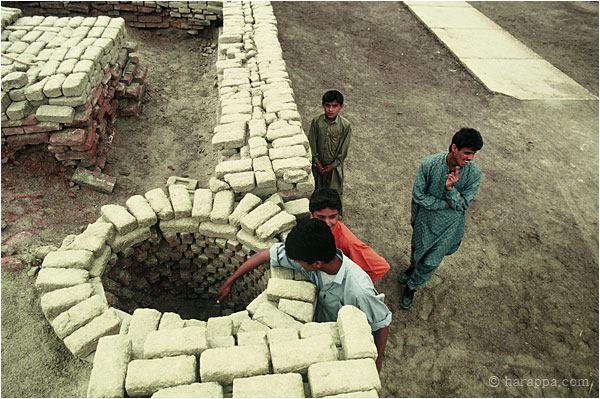
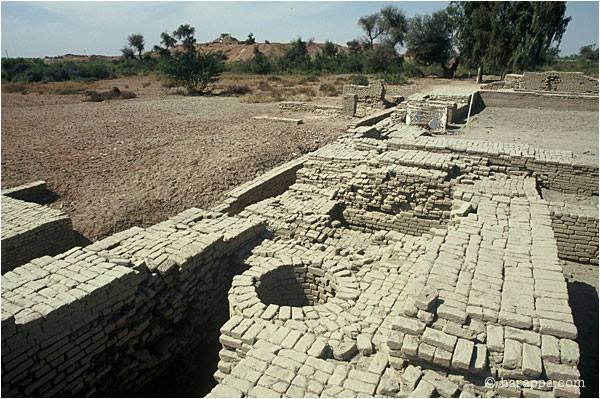
  • Wells were made with wedge shaped bricks to make a strong circular structure. Some bricks were made with special grooves to keep the ropes from sliding sideways when drawing water.  Although most wells were located inside private buildings, the city planners of Mohenjo Daro provided some public wells that could be accessed directly from the main street. This well and nearby walls have been covered with mud brick to protect them from salt crystallization  Each block of buildings at Mohenjo-Daro was supplied with one or more wells such as this one in DK-G Area. When archaeologists excavated the fill around the well they were left standing to show the final levels of use. This well was associated with a finely constructed bathing platform. A stairway leads up to the well and platform from a lower room. The walls and well have been covered with mud brick and sprayed with clay slurry to protect them from salt crystallization.
    Wells were made with wedge shaped bricks to make a strong circular structure. Some bricks were made with special grooves to keep the ropes from sliding sideways when drawing water.  Although most wells were located inside private buildings, the city planners of Mohenjo Daro provided some public wells that could be accessed directly from the main street. This well and nearby walls have been covered with mud brick to protect them from salt crystallization  Each block of buildings at Mohenjo-Daro was supplied with one or more wells such as this one in DK-G Area. When archaeologists excavated the fill around the well they were left standing to show the final levels of use. This well was associated with a finely constructed bathing platform. A stairway leads up to the well and platform from a lower room. The walls and well have been covered with mud brick and sprayed with clay slurry to protect them from salt crystallization.

Mohenjo-daro has been called the "city of wells." Mark Kenoyer writes: "On the basis of the number of wells found in the excavated areas, Michael Jansen has calculated that the city may have had over 700 wells. In contrast Harappa may have had as few as 30, since only 8 wells have been discovered in the areas excavated so far. The difference between these two cities may be that Mohenjo-daro had less winter rain and may have been situated far away from the Indus river. At Harappa a large depression in the center of the city may represent a large tank or reservoir accessible to the inhabitants from all the different neighborhoods. The site of Dholavira has only a few wells, but most water for the city was collected during the rainy season in large stone cisterns. The drains for collecting rain water were built separately from drains used to take away dirty sewage water." (Kenoyer, Ancient Cities, p. 59)

Mohenjo-daro City of Wells II

Homes

Blog Posts by Subject (16)
  • Animals
  • Art
  • Children
  • City Life
  • Conferences
  • Crafts and Industry
  • Evolution
  • Excavations
  • Food
  • Homes
  • Media
  • Museums
  • Mysteries
  • News
  • People
  • Seals
© Harappa.com 1995-2026 31