Home

Main navigation

  • home
  • slides
  • essays
  • articles
  • books
  • video
  • q & a
  • blog
Secondary menu
  • about us
    • scholars
    • privacy
    • support
    • image rights
    • credits
    • contact us
  • resources

Jewelry from Mohenjo-daro

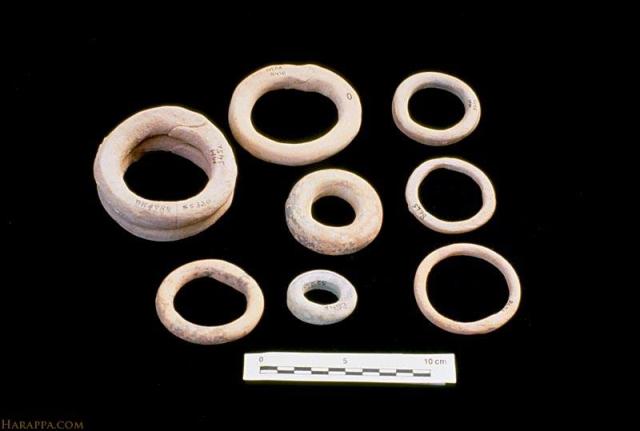
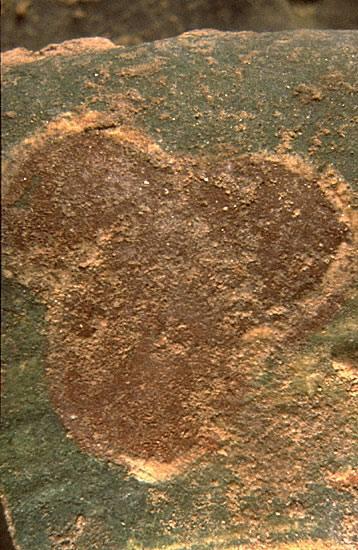
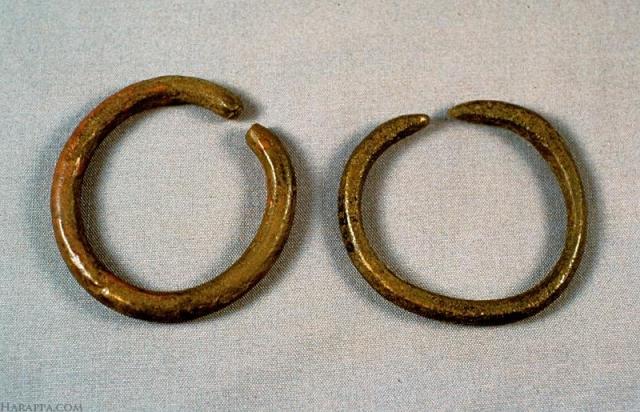
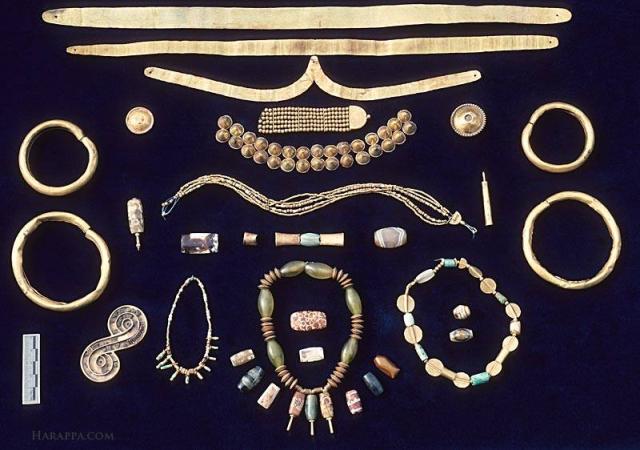
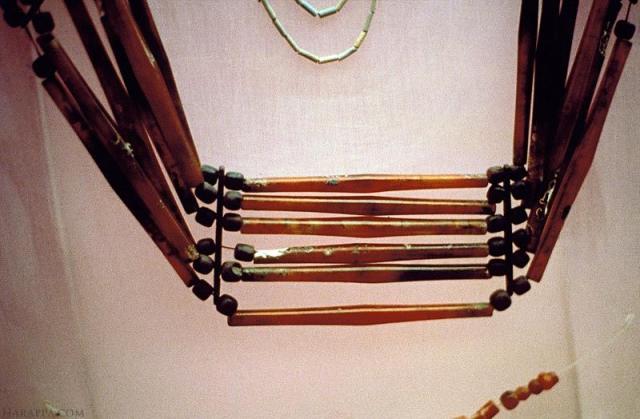
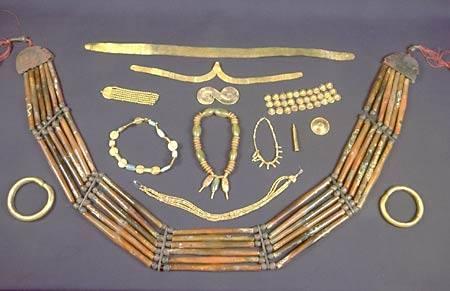
  • Many of the terra cotta bangles were originally painted with black or red designs. Such ornaments are found in the thousands and may have been worn, broken and discarded much as glass bangles are used today throughout the subcontinent. Detail of terracotta bangle with red and white trefoil on a green background (H98-3516/8667-01 from Trench 43). Trefoil motifs are carved on the robe of the so-called "priest-king" statuette from Mohenjo-daro and are also known from contemporary sites in western Pakistan, Afghanistan, and southern Central Asia. The bangles were made from a round hammered rod bent in a full circle. The space between the ends of the bangle would be pried apart to slip it over the wrist. This collection of gold and agate ornaments includes objects found at both Mohenjo-daro and Harappa. At the top are fillets of hammered gold that would have been worn around the forehead.  The other ornaments include bangles, chokers, long pendant necklaces, rings, earrings, conical hair ornaments, and broaches. Such ornaments were never buried with the dead, but were passed on from one generation to the next. These ornaments were hidden under the floors in the homes of wealthy merchants or goldsmiths.  This artifact has 42 long bicone carnelian beads, 72 spherical bronze beads, 6 bronze spacer beads, 2 half moon shaped bronze terminals, 2 hollow cylindrical bronze terminals. Hoard No. 2, DK Area, Room 1, House 1, Trench E. Fired steatite was an important material used in many different types of Indus jewelry. Steatite beads are found in all four necklaces in the center of this collection of jewelry from Harappa and Mohenjo-daro.
    Many of the terra cotta bangles were originally painted with black or red designs. Such ornaments are found in the thousands and may have been worn, broken and discarded much as glass bangles are used today throughout the subcontinent. Detail of terracotta bangle with red and white trefoil on a green background (H98-3516/8667-01 from Trench 43). Trefoil motifs are carved on the robe of the so-called "priest-king" statuette from Mohenjo-daro and are also known from contemporary sites in western Pakistan, Afghanistan, and southern Central Asia. The bangles were made from a round hammered rod bent in a full circle. The space between the ends of the bangle would be pried apart to slip it over the wrist. This collection of gold and agate ornaments includes objects found at both Mohenjo-daro and Harappa. At the top are fillets of hammered gold that would have been worn around the forehead.  The other ornaments include bangles, chokers, long pendant necklaces, rings, earrings, conical hair ornaments, and broaches. Such ornaments were never buried with the dead, but were passed on from one generation to the next. These ornaments were hidden under the floors in the homes of wealthy merchants or goldsmiths.  This artifact has 42 long bicone carnelian beads, 72 spherical bronze beads, 6 bronze spacer beads, 2 half moon shaped bronze terminals, 2 hollow cylindrical bronze terminals. Hoard No. 2, DK Area, Room 1, House 1, Trench E. Fired steatite was an important material used in many different types of Indus jewelry. Steatite beads are found in all four necklaces in the center of this collection of jewelry from Harappa and Mohenjo-daro.

Includes long carnelian beads and necklace, fired steatite beads and gold objects, terra cotta bangles and detail in red, white and green, metal bangles and gold and agate ornaments.

See also Carnelian Beads and Ornaments and Jewelry.

Art

Blog Posts by Subject (16)
  • Animals
  • Art
  • Children
  • City Life
  • Conferences
  • Crafts and Industry
  • Evolution
  • Excavations
  • Food
  • Homes
  • Media
  • Museums
  • Mysteries
  • News
  • People
  • Seals
© Harappa.com 1995-2026 31