
Home

Main navigation

  • home
  • slides
  • essays
  • articles
  • books
  • video
  • q & a
  • blog
Secondary menu
  • about us
    • scholars
    • privacy
    • support
    • image rights
    • credits
    • contact us
  • resources

The First Images of the Announcement: The Illustrated London News

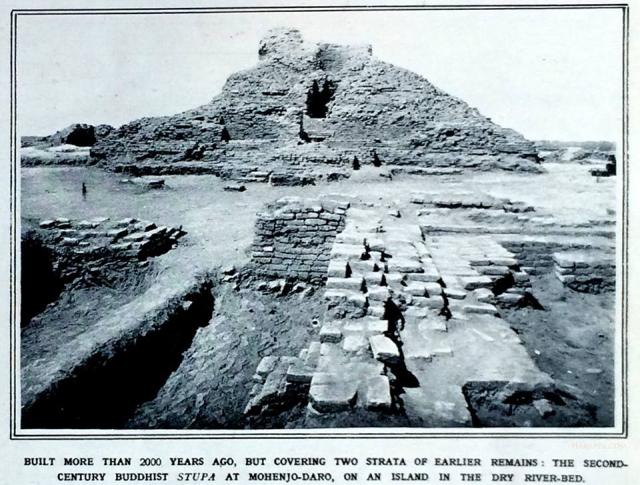
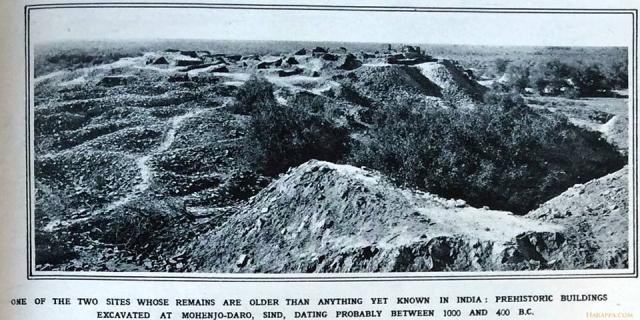
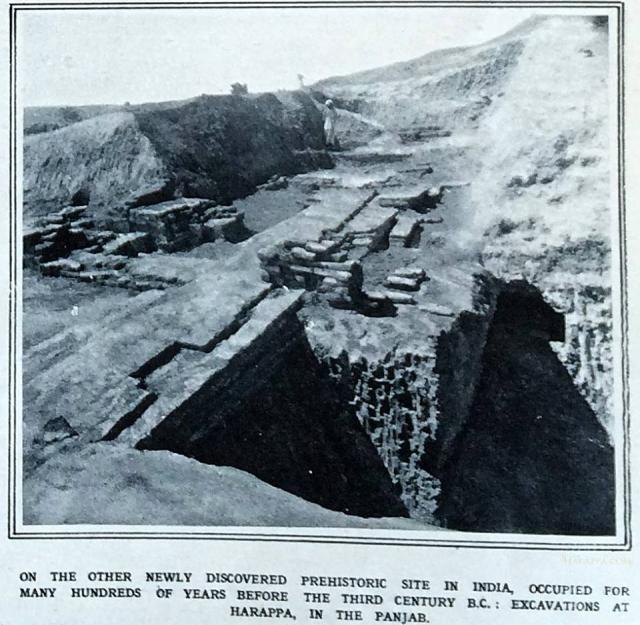
  • "The two sites where these somewhat startling remains have been discovered are some 400 miles apart – the one being at Harappa in the Montgomery District of the Panjab, and the other at Mohenjo-daro in the Larkana District of Sindh. At both these places there is a vast expanse of artificial mounds evidently covering the remains of once flourishing cities, which . . . must have been in existence for many hundreds of years." The excavations at Mohenjo-daro were made by Mr. Banerji. "At Harappa, Mr. Daya Ram Sahni's excavations disclosed as many as seven or eight successive levels, demonstrating the long and continuous occupation of the site during many hundreds of years prior to the third century B.C."
    "The two sites where these somewhat startling remains have been discovered are some 400 miles apart – the one being at Harappa in the Montgomery District of the Panjab, and the other at Mohenjo-daro in the Larkana District of Sindh. At both these places there is a vast expanse of artificial mounds evidently covering the remains of once flourishing cities, which . . . must have been in existence for many hundreds of years." The excavations at Mohenjo-daro were made by Mr. Banerji. "At Harappa, Mr. Daya Ram Sahni's excavations disclosed as many as seven or eight successive levels, demonstrating the long and continuous occupation of the site during many hundreds of years prior to the third century B.C."

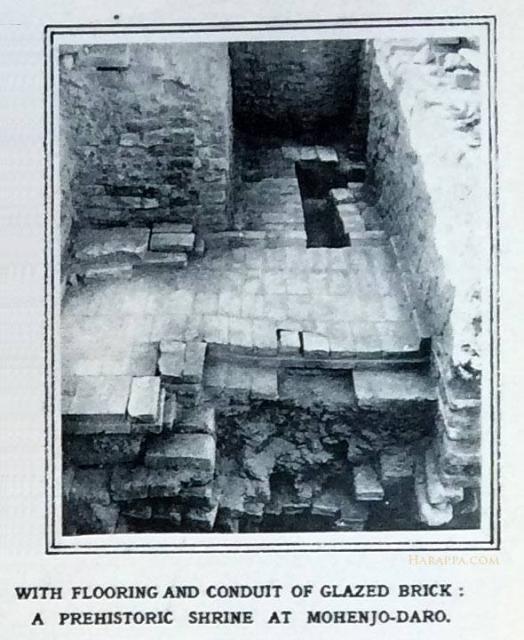
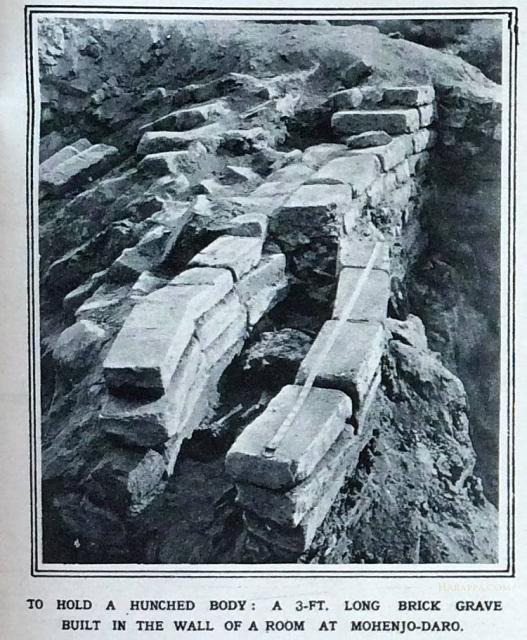
The first images of the announcement of the discovery of the ancient Indus Valley civilization in the Illustrated London News, on September 20, 1924. "The remarkable discoveries here illustrated put back by several centuries the date of the earliest known remains of Indian civilization. In his deeply interesting article describing them (on page 528) Sir John Marshall compares them to the work of Schliemann at Tiryns and Mycenae, where likewise it fell to the archaeologist to break new ground and reveal the relics of a long forgotten past. "It looks at this moment," writes Sir John, "as if we were on the threshold of such a discovery on the plains of the Indus. Up to the present our knowledge of Indian antiquities has carried us back hardly further than the third century before Christ . . . The two sites where these somewhat startling remains have been discovered are some 400 miles apart - the one being at Harappa in the Montgomery District of the Panjab, the other at Mohenjo-Daro in the Larkana District of Sindh. At both these places there is a vast expanse of artificial mounds evidently covering the remains of once-flourishing cities, which . . . must have been in existence for many hundreds of years." Of course, many of the facts were still not clear, like the true age of the cities, off by one or two thousand years.

See also Discovering the Forgotten.

Evolution

Blog Posts by Subject (16)
  • Animals
  • Art
  • Children
  • City Life
  • Conferences
  • Crafts and Industry
  • Evolution
  • Excavations
  • Food
  • Homes
  • Media
  • Museums
  • Mysteries
  • News
  • People
  • Seals
© Harappa.com 1995-2026 31