
Home

Main navigation

  • home
  • slides
  • essays
  • articles
  • books
  • video
  • q & a
  • blog
Secondary menu
  • about us
    • scholars
    • privacy
    • support
    • image rights
    • credits
    • contact us
  • resources

The Evolution of Indus Script

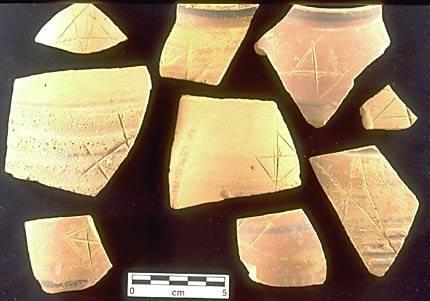
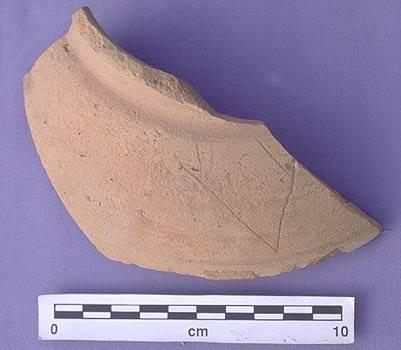
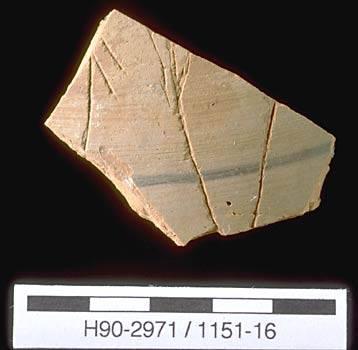
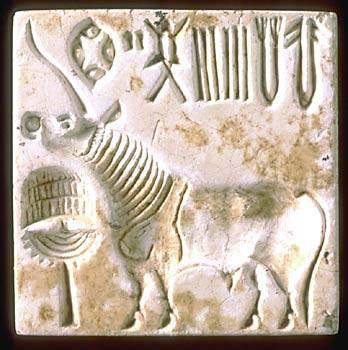
  • Many sherds inscribed after firing have single geometric signs. This collection of Early Harappan sherds from Periods 1 and 2 (c. 3300-2800 BC) show a range of geometric signs that are roughly similar to later signs in the Indus script. This sign was carved onto the pottery vessel after it was fired and may indicate the type of goods being stored in the vessel or the owner of the vessel itself. Another possible explanation is that this symbol represents a deity or spirit to which the contents of the vessel were sacrificed. This symbol becomes very common in the later Indus script. On some sherds, two signs of the Early Indus script (Kot Dijian Phase) appear together. The complete shapes of these signs can be seen on later seals carved with the Indus script (see next image). The sign on the left eventually becomes one of the most common signs of the Indus script (only part of which is preserved). A steatite unicorn seal from Harappa with Indus script. This seal was found in the central area of Mound E and dates to Period 3B or early 3C, around 2450-2200 BC. When pressed into clay the impression will be reversed. Since the Indus script may have been read from right to left, the last two signs visible at the top right hand edge of the seal would in fact be the last two signs of the inscription. They thus would be positioned in the same order as seen on the Early Harappan sherd (previous image) that da
    Many sherds inscribed after firing have single geometric signs. This collection of Early Harappan sherds from Periods 1 and 2 (c. 3300-2800 BC) show a range of geometric signs that are roughly similar to later signs in the Indus script. This sign was carved onto the pottery vessel after it was fired and may indicate the type of goods being stored in the vessel or the owner of the vessel itself. Another possible explanation is that this symbol represents a deity or spirit to which the contents of the vessel were sacrificed. This symbol becomes very common in the later Indus script. On some sherds, two signs of the Early Indus script (Kot Dijian Phase) appear together. The complete shapes of these signs can be seen on later seals carved with the Indus script (see next image). The sign on the left eventually becomes one of the most common signs of the Indus script (only part of which is preserved). A steatite unicorn seal from Harappa with Indus script. This seal was found in the central area of Mound E and dates to Period 3B or early 3C, around 2450-2200 BC. When pressed into clay the impression will be reversed. Since the Indus script may have been read from right to left, the last two signs visible at the top right hand edge of the seal would in fact be the last two signs of the inscription. They thus would be positioned in the same order as seen on the Early Harappan sherd (previous image) that da

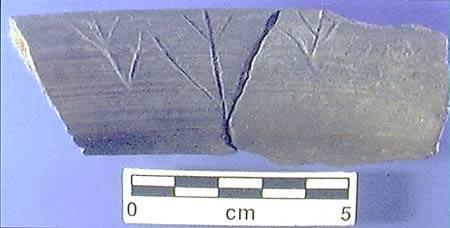
The origins of Indus writing can now be traced as far back as the Ravi Phase (c. 3300-2800 BCE) at Harappa. Some inscriptions were made on the bottom of the pottery before firing. Other inscriptions such as this one were made after firing. This inscription (c. 3300 BCE) appears to be three plant symbols arranged to appear almost anthropomorphic. The trident looking projections on these symbols seem to set the foundation for later symbols.

See also Dr. Parpola's Deciphering the Indus Script and Iravatham Mahadevan's The Indus Script.

Evolution

Blog Posts by Subject (16)
  • Animals
  • Art
  • Children
  • City Life
  • Conferences
  • Crafts and Industry
  • Evolution
  • Excavations
  • Food
  • Homes
  • Media
  • Museums
  • Mysteries
  • News
  • People
  • Seals
© Harappa.com 1995-2026 31