Home

Main navigation

  • home
  • slides
  • essays
  • articles
  • books
  • video
  • q & a
  • blog
Secondary menu
  • about us
    • scholars
    • privacy
    • support
    • image rights
    • credits
    • contact us
  • resources

Anthropomorphized Tigers in Harappa

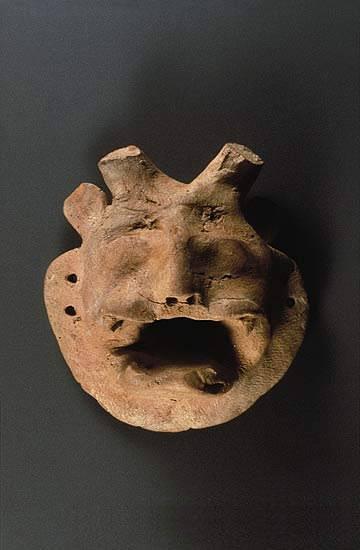
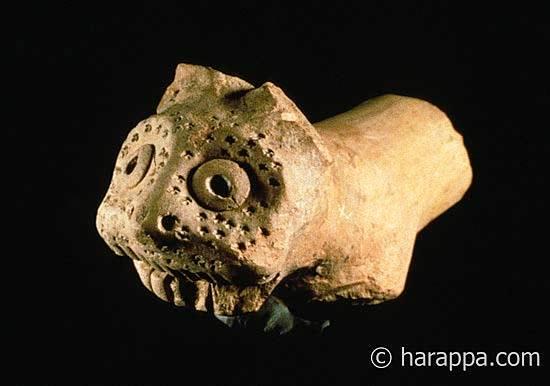
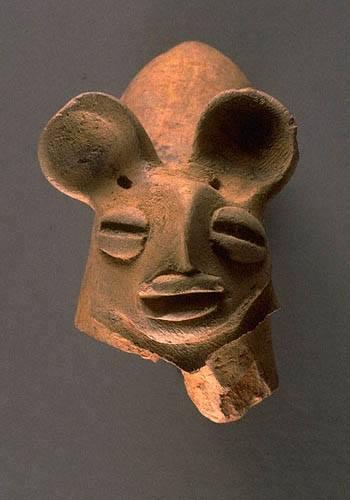
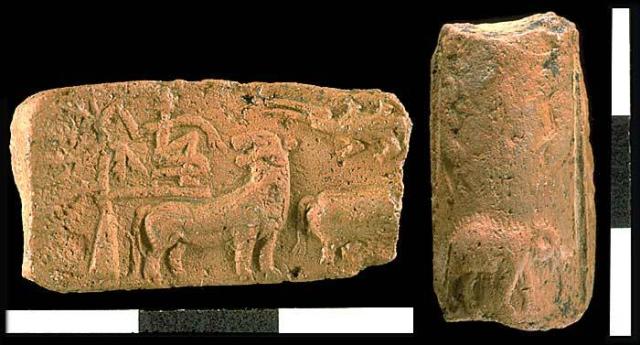
  • In the center is miniature mask of horned deity with human face and bared teeth of a tiger. A large mustache or divided upper lip frames the canines, and a flaring beard adds to the effect of rage. The eyes are defined as raised lumps that may have originally been painted. Short feline ears contrast with two short horns similar to a bull rather than the curving water buffalo horns. Two holes on either side allow the mask to be attached to a puppet or worn as an amulet. Tiger or leopard figurine with incised facial features, including punctated dots on the face that could be whisker marks. This figurine depicts a normal feline without horns or human face and therefore probably represents the actual wild animal. Hand formed with applique eyes. It has been suggested that some feline figurines have anthropomorphic facial features. While features such as "coffee bean" eyes are unusual, the facial features of many animal figurines are stylized. Such features as beards are not necessarily anthropomorphic features, but may represent either tigers’ ruffs or lions’ manes. Variations in facial features may represent differences in wild felines rather than anthropomorphization. Molded terra cotta tablet (H2001-5075/2922-01) with a narrative scene of a man in a tree with a tiger looking back over its shoulder. The tablet, found in the Trench 54 area on the west side of Mound E, is broken, but was made with the same mold as ones found on the eastern side of Mound E and also in other parts of the site (see Indus Slides 89 for right hand portion of same scene). The reverse of the same molded terra cotta tablet shows a deity grappling with two tigers and standing above an elephant.
    In the center is miniature mask of horned deity with human face and bared teeth of a tiger. A large mustache or divided upper lip frames the canines, and a flaring beard adds to the effect of rage. The eyes are defined as raised lumps that may have originally been painted. Short feline ears contrast with two short horns similar to a bull rather than the curving water buffalo horns. Two holes on either side allow the mask to be attached to a puppet or worn as an amulet. Tiger or leopard figurine with incised facial features, including punctated dots on the face that could be whisker marks. This figurine depicts a normal feline without horns or human face and therefore probably represents the actual wild animal. Hand formed with applique eyes. It has been suggested that some feline figurines have anthropomorphic facial features. While features such as "coffee bean" eyes are unusual, the facial features of many animal figurines are stylized. Such features as beards are not necessarily anthropomorphic features, but may represent either tigers’ ruffs or lions’ manes. Variations in facial features may represent differences in wild felines rather than anthropomorphization. Molded terra cotta tablet (H2001-5075/2922-01) with a narrative scene of a man in a tree with a tiger looking back over its shoulder. The tablet, found in the Trench 54 area on the west side of Mound E, is broken, but was made with the same mold as ones found on the eastern side of Mound E and also in other parts of the site (see Indus Slides 89 for right hand portion of same scene). The reverse of the same molded terra cotta tablet shows a deity grappling with two tigers and standing above an elephant.

Indus Tigers found at Harappa in recent years, often anthropomorphized. "The most dangerous animals living in the vicinity of the Indus cities were tigers and leopards. The leopard is rarely depicted but some figurines have spotted faces that may indicate the elusive markings of this elusive cat. Both of these large predators would have been a serious threat to human life and domestic animals. Before the introduction of firearms, these animals were usually killed in traps or with poisoned arrows. Among some Naga communities of eastern India, the tiger is totemic animal and the meat is never eaten by members of the tiger clan. Other communities do eat the meat, but it is considered to be very "hot," stimulating a fiery and ferocious temper. While such a temperament is undesirable for some individuals, it is needed for hunters and warriors and may explain the symbolic meaning of the tiger-bearded male figurines from Harappa and Mohenjo-daro." (J.M. Kenoyer, Ancient Cities of the Indus Valley Civilization, p. 167).

Art

Blog Posts by Subject (16)
  • Animals
  • Art
  • Children
  • City Life
  • Conferences
  • Crafts and Industry
  • Evolution
  • Excavations
  • Food
  • Homes
  • Media
  • Museums
  • Mysteries
  • News
  • People
  • Seals
© Harappa.com 1995-2026 31