Home

Main navigation

  • home
  • slides
  • essays
  • articles
  • books
  • video
  • q & a
  • blog
Secondary menu
  • about us
    • scholars
    • privacy
    • support
    • image rights
    • credits
    • contact us
  • resources

Black and White Ancient Indus Civilization Images

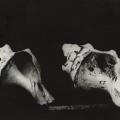
Two Fasciolaria Trapezium Shells

Harappan shell working was carried out in many areas of the site using a wide range of marine shell species. These two examples of Fasciolaria trapezium, have been chipped to remove pieces of the outer shell that may have been used for making shell … >

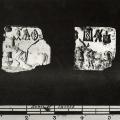
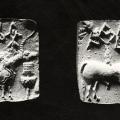
Two Steatite Unicorn Seals

The seals are published as Plate XIX, 8 and 9 in Sahni's report (Daya Ram Sahni, 1926. Annual Report Of The Archaeological Survey Of India 1923-24, pg 54.), but they are not individually identified in the text. The seal on the right (Pl. XI… >

Copper Toiletry Set

  • Copper surgical or toilet set from Harappa

"The sites F and A — B and some of the other mounds bid fair to yield many more valuable relics and the deep ravines cut by rain water afford convenient places for reaching the earlier strata with comparatively little trouble. One of these ravines i… >

Two Button Seals Harappa

Obverse and Reverse of a Seal, published [in the same sequence as in the photograph] in Vats 1940, Vol. II, Pl. XCI, field No. 255. Title: ‘Rhomboidal Steatite Seal’, no. 255. Found from Pit IV Mound AB, Vats noted: “Pit IV was excavated to a … >

Harappa Pit II Excavations

View of the area of Pit II, Section B, Mound AB, before deep digging. Traces of structures underneath, with the label Pit II 98 written on a potsherd. >

Harappa Terracotta Objects including Dice

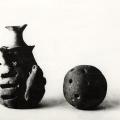
Left: Terracotta Birdcage. Find no. Ab 554. Published in Vats 1940 (Vol. II) Pl. CXX, no. 22. Middle: a round dice, or a ball, with holes on surface. Find no. 5859. Right: Double headed terracotta bust of lion on a cone. Published in ARAS… >

Two Unicorn Sealings from Harappa

These two sealings are labelled 1917-1920 in the ASI archives. They come from Punjab volume 26, earlier than the full 1921 excavation images which were in volumes 27 and 28. Why 1917? In the absence of more information it is hard to say much except … >

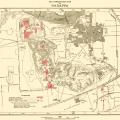
The Prehistoric Site of Harappa

"As already stated, the principal mounds form a rough parallelogram. designated AB, E, and the one occupied by the present town are higher and larger than Mounds F, D and the Thana Mound." >

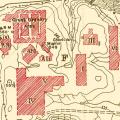
Mound F Site Map

A close view of the plan for Mound F (where the so-called "Great Granary" is located) at Harappa from Madho Sarop Vats, Excavations at Harappa, Delhi, 1940, pp. 17, which was published some 16 years after Sahni's excavations here during the 1923-24 … >

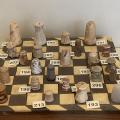
Game Board

A wide variety of game pieces from Mohenjo-daro on a modern wooden board. Sir John Marshall, one of the earliest excavators at Mohenjo-daro writes in the monumental work summarizing the first finds at the site (Mohenjo-daro and the Indus Civiliza… >

Pagination

  • First page
  • Previous page
  • …
  • Page 6
  • Page 7
  • Page 8
  • Page 9
  • Page 10
  • Page 11
  • Page 12
  • Page 13
  • Page 14
  • …
  • Next page
  • Last page
© Harappa.com 1995-2026 31