Home

Main navigation

  • home
  • slides
  • essays
  • articles
  • books
  • video
  • q & a
  • blog
Secondary menu
  • about us
    • scholars
    • privacy
    • support
    • image rights
    • credits
    • contact us
  • resources

Black and White Ancient Indus Civilization Images

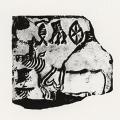
Steatite Unicorn Seals

  • Three seals

It is worth noting that in these earlier reports, seals were photographed in their original form. In Vats' monograph, photographs of the stamp seals were mostly taken from plaster casts of the originals, i.e. these photographs were the reverse of th… >

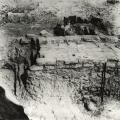
Circular Hearth with Platform

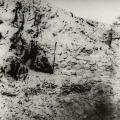
Circular Hearth with Platform in western portion of Trench A (f) Described by Sahni as a paved circular structure. This can be seen in the foreground of Plate X (a), Vats 1940, Vol. II that shows a ‘General View of Trench Af from North-West’ L… >

Terracotta tiles with only a foot of Sculpture

Terracotta tiles with only a foot of the sculpture fig. extant found in Mound B. Sahni reported finds of Kushan period antiquities from the upper portion of Mound B. However, there is no mention of finds of tiles in his report in ARASI 1924-2… >

Three Inscribed Seals

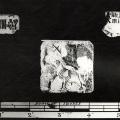
The central unicorn seal is the same as the one pictured earlier. The rectangular seal fragment on the left is a style of seal without any animal motif and starts to be found at Harappa starting around 2450-2200 BCE (Harappa Period 3B) and 2200-1900… >

Harappa Trench B from East

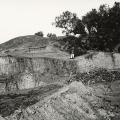
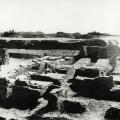
Trench B is the name given to a series of trenches dug in mound A-B over successive seasons by Dara Ram Sahni between 1921 and 1925. (See below for details in Vats' account) "The operations were then shifted to the mound marked A—B in General Cun… >

Earthen Jar Fragments Trench AF

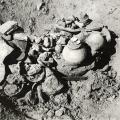
Published in ARASI 1924-25, Plate XXIV (d). Title: ‘Harappa: Mound F, Contents of a Cinerary Jar (A (F) 317)’ Sahni described the area this was found as: “between the trench “Ae” … and the long trench A, a large rectangular cutting A(f)… >

Block of Parallel Walls 3

Another view of the excavations at the area of the Parallel Walls, which Sahni described as the most outstanding finds of the year. Sahni, as Vats subsequently mentioned, excavated the Eastern portion of this structure. For Sahni’s description o… >

Faience Objects

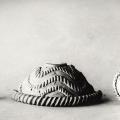
Find nos. AF12, P IV 100, B 1705. 1. Left: broken piece of a bangle, resembles Pl CXXXVIII, no 5, Possibly of faience. Vats noted: “Most of the faience examples are ornamented with cog-wheel edges or incised linear patterns” (Vats 1940, p. 448)… >

Stone Objects Harappa

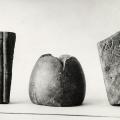
Left: Inscribed pottery Middle resembles no. 21, in Vats 1940 (Vol. II) Pl LXXXIII. Vats described this and another (no. 20) as quatrefoil cones. See Photo 54 for description of 20. “… No. 21 (PII-20) of red sandstone. This latter is the best… >

Terracotta Dog, Ram and Bulls

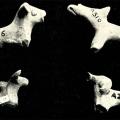
Daya Ram Sahni described these four objects as a "a terracotta dog (A 166), a ram (A 233) ; and two bulls (A 310 and C 14)" the latter of which he considered "nicely made" (p. 13, 26). The ram was found in the large earthen chati (A 233). He conside… >

Pagination

  • First page
  • Previous page
  • …
  • Page 3
  • Page 4
  • Page 5
  • Page 6
  • Page 7
  • Page 8
  • Page 9
  • Page 10
  • Page 11
  • …
  • Next page
  • Last page
© Harappa.com 1995-2026 31