The Elamites are said to be Tamilians and so are the Indus Valley people. Were the people of common ethnic origin? Further the word Dravidians is supposed be derived from the word Tamilian? Is this true? Submitted by Anil. Editor’s note: In general, could you please explain the distinction between ethnicity and language and the extent to which they can be expected to overlap.
We can say that the bulk of the development of the Harappan civilization happened in the Indus Valley itself. What can you comment about their relationship with other cities in Anatolia after the discovery of the city of Catal Huyuk by the English archaeologist James Mellaart in 1958. Is Catal Huyuk a more primitive precursor of this civilization or they parallel developments? Submitted by Martin Piattini Velthuis
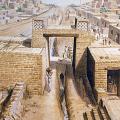
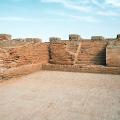
Why were there (terracotta) balls on the Citadel wall in Mohenjo-Daro? Have any more statues been found or anything like a temple? Have you found out any more information on the Indus leaders or their names? Submitted by Gharial Abramnova from school student questions
Harappan Civilisation is often characterised (for example by the Director of the British Museum on a Radio 4 series) or even idealised as peaceful and without warfare or conquest, (in comparison with all other First Civilisations) with its cities linked across vast regions and unified (variously) by trade and/or religion. Rulers have even been said to be priests or a theocracy. These interpretations are often presented as facts in books or articles for general consumption.
If we assume that some migration did take place from Indus valley to South India sometime around 2000 BC or so, then it could have been through the sea. Could it not be possible to get some remnants of ship break or some marine fossils to substantiate this fact? Submitted by Prakash
This case is being made on the basis of circumstantial evidence. Did the people of Indus Valley Civilization interact with people of the Rigveda? What is the relationship between the Indus Valley people and Vedic people? Submitted by Shubha Khandekar and others
Having toured the ruins of the Egyptian civilization in Cairo, Mayan in Guatemala/Mexico, Inca in Peru, what intrigues me about the Indus Valley civilization is that it was prosperous, peace loving AND egalitarian. I don't believe there is other precidence of these elements in unison being maintained over millenia. Clearly this is something worth researching to find clues of how to create sustainability in today's world.