
![Seal Depicting Oxen [Unicorn]](https://www.harappa.com/sites/default/files/styles/large/public/unicorn-seal-met.jpg?itok=QpXIONWH "3. Seal Depicting Oxen [Unicorn]")
![Sealing Depicting Oxen [Unicorn]](https://www.harappa.com/sites/default/files/styles/large/public/indus-unicorn-sealing-met.jpg?itok=3-vylNZq "4. Sealing Depicting Oxen [Unicorn]")
![Seals and Sealing Depicting Oxen [Unicorn]](https://www.harappa.com/sites/default/files/styles/large/public/unicorn-seal-sealing-met-2.jpg?itok=hn7WTka5 "7. Seals and Sealing Depicting Oxen [Unicorn]")
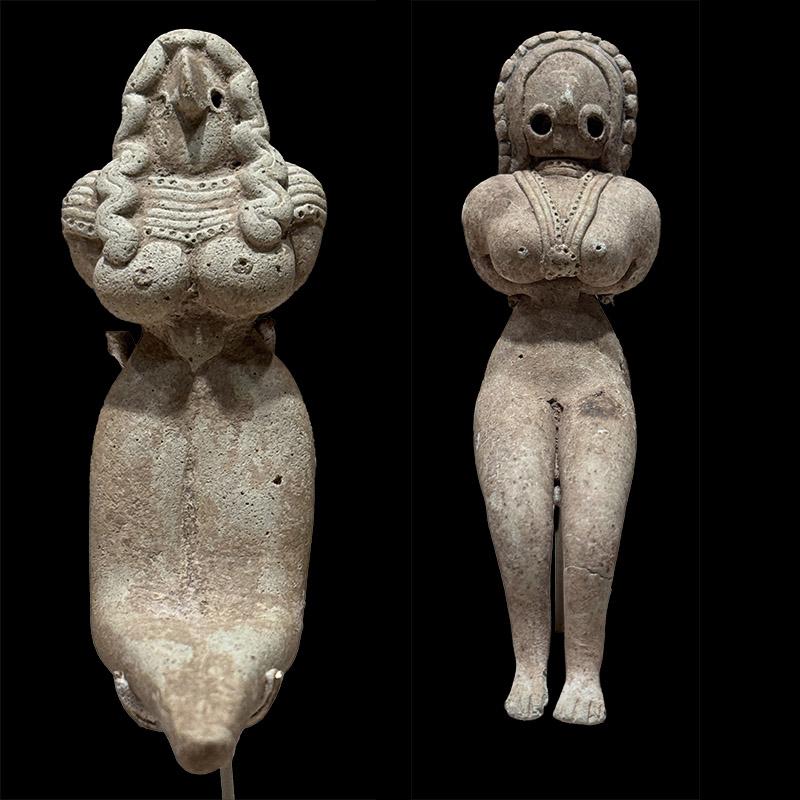
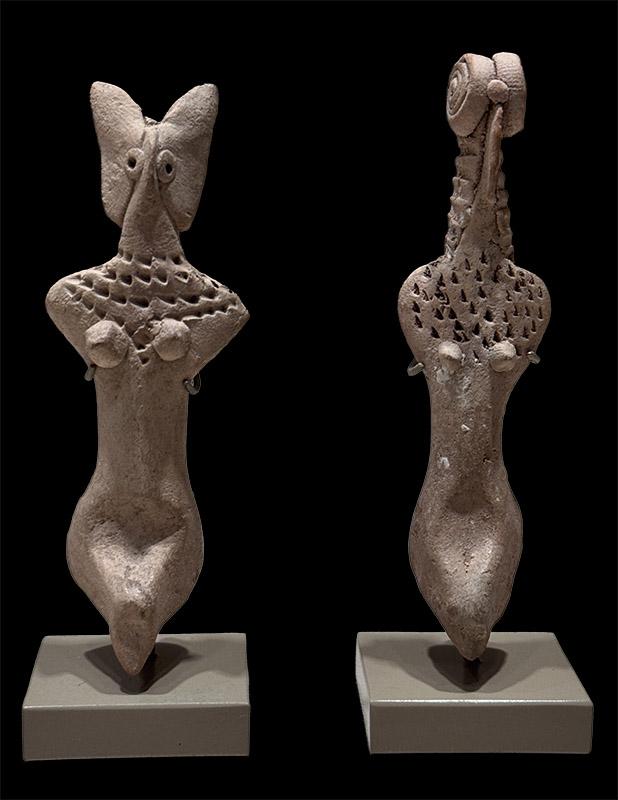
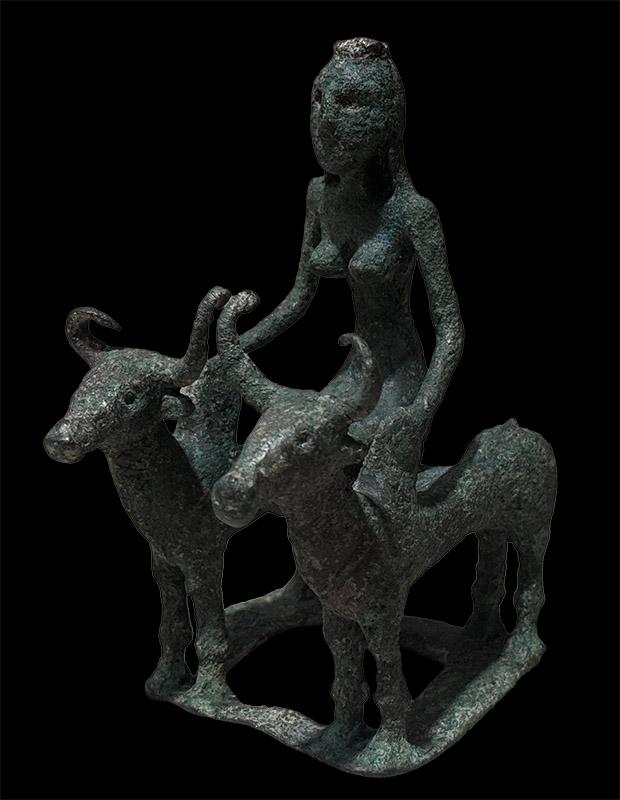
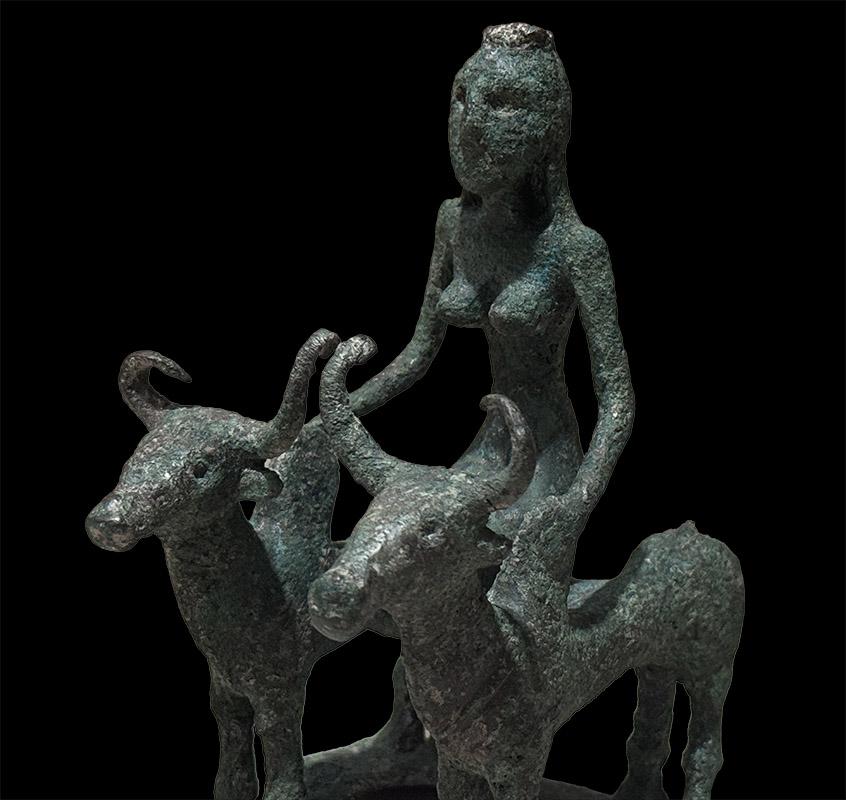
A decade after writing about a visit to the Metropolitan Museum of Art in New York's small Indus collection, I returned to find a number of new objects on display and others removed from view (see the first visit). Unfortunately. the larger issue with the display had not been solved. There were more Mehrgarh-type figurines available from the Quetta area in Balochistan, plus two seals depicting unicorns (wrongly called oxen in the Met's title). This time I chose to show the objects on black to give them better definition, and the better iPhone lens made closer shots, especially of the Woman Riding Two Brahman Bulls, a possible late Indus object from U.P.
Given that the Met, one of the world's greatest and most visited museums, has a number of other ancient Indus objects, it is hoped that one day they at least dedicate a full case to their ancient Indus and related object collections and provide a proper contextual explanation around the civilization and its antecedents in Balochistan and later possible developments in Uttar Pradesh. The large South Asian population in the New York and New Jersey area would probably be delighted, as would the wider public whose knowledge about this ancient civilization is meagre at best and way out of proportion to its contribution to human civilization. Both ancient Egypt and ancient Mesopotamia are represented in numerous galleries (whole rooms) in the Met, and there are good reasons for that abundance in terms of donations and collections, it would seem that a single permanent cabinet within a gallery devoted to the Indus civilization would be a reasonable step towards correcting a gross imbalance.
- Omar Khan, June 2026
Below are the descriptions as given by the Met's interpretive labels, with help from their catalog.
1. Seated Mother Goddesses Pakistan (Baluchistan), ca. 3000-2500 BCE. [Left] Purchase, Nancy Wiener Gallery Gift, 2001. 2001.305. [Right] Purchase, Mary W. Harriman Foundation and Ramon Tublitz Gifts, 2001. 2001.306
2. Two Goddesses (Quetta area), ca. 3500-3000 B.C. Terracotta. Purchase, David E. Stutzman Gift, 2003. 2003.571.1, .2.
3. & 4. Seal and Sealing Depicting Oxen [Unicorn; also called Stamp seal: buffalo with incense burner (?) in the online catalog]. Dodge Fund, 1949. 49.40.2.
5. & 6. Woman Riding Two Brahman Bulls. Northern India, Uttar PRadesh, possibly Kaushambi. Late Harappan period, 2000-1750 B.C. Copper Alloy. Gift of Jonathan and Jeanette Rosen, 2015. 2015.505.
This is the oldest known bronze object in the Museumm's Indian collections, and is a rare survivor of the early bronze culture associated with the late Harappan civilization shared across northern India and the Indus Valley (Pakistan) in the second millennium B.C. Two humped ["Brahman"] bulls support a platform on which is a woman knelling [kneeling]. Her figure type is mirrored in standing females in clay from this period.
7. Seal and Sealing Depicting Oxen [Unicorn]. Gift of Michael and Georgia de Havenon, 1984. 1984.482.