Home

Main navigation

  • home
  • slides
  • essays
  • articles
  • books
  • video
  • q & a
  • blog
Secondary menu
  • about us
    • scholars
    • privacy
    • support
    • image rights
    • credits
    • contact us
  • resources

Ringstones

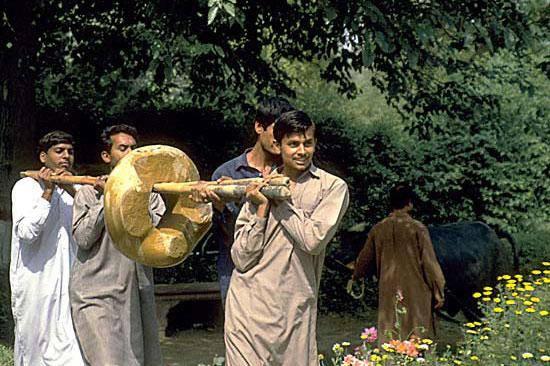
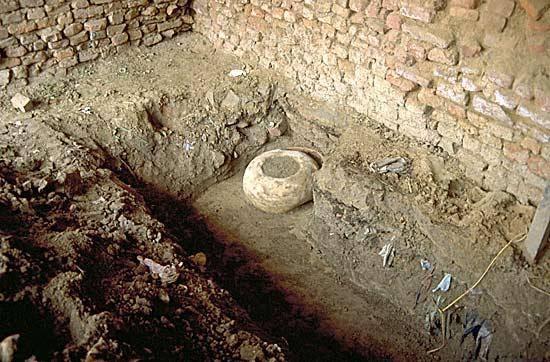
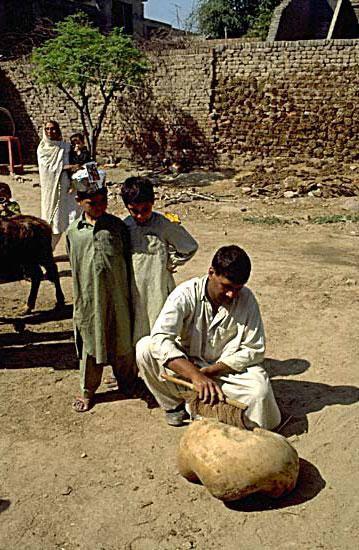
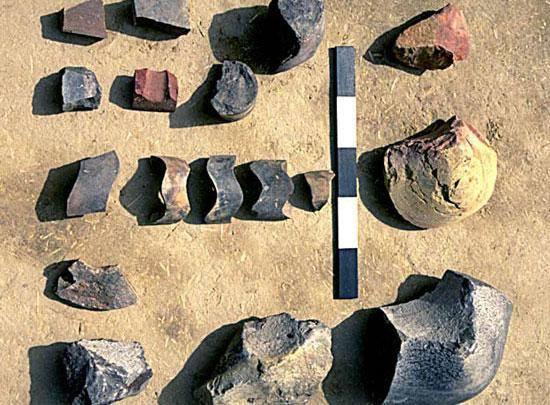
  • Laboratory assistants Mohammad Naim, Shokat Ali, Said Ahmed, and Mukthar Massih carry the cleaned and conserved ringstone to the Harappa Museum for display. This Harappa phase ringstone was originally found many years ago while local residents were digging a well in Harappa town. After some time it ended up at a house in Harappa town where it eventually became buried in the courtyard. It was located by HARP through information supplied by local residents and was given to the Harappa Museum by the Harappa resident who had it in his courtyard. Excavation assistant Abdul Jabbar from Harappa town begins cleaning the ringstone after excavation. Different sizes and colors of ringstones from upper Harappa phase levels of Mound AB, Trench 39N. The smaller rings may have been used to make decorative columns while the larger ones were probably column bases.
    Laboratory assistants Mohammad Naim, Shokat Ali, Said Ahmed, and Mukthar Massih carry the cleaned and conserved ringstone to the Harappa Museum for display. This Harappa phase ringstone was originally found many years ago while local residents were digging a well in Harappa town. After some time it ended up at a house in Harappa town where it eventually became buried in the courtyard. It was located by HARP through information supplied by local residents and was given to the Harappa Museum by the Harappa resident who had it in his courtyard. Excavation assistant Abdul Jabbar from Harappa town begins cleaning the ringstone after excavation. Different sizes and colors of ringstones from upper Harappa phase levels of Mound AB, Trench 39N. The smaller rings may have been used to make decorative columns while the larger ones were probably column bases.

Ringstones are among the most fascinating of ancient Indus objects, particularly after recent research has shown some of those at Harappa to have originally been manufactured near Dholavira and then transported some 1,000 kilometers north. We think they might have been used to support wooden pillars. Here a newly re-discovered ringstone from Harappa is being transported to the Harappa Museum.

Homes

Blog Posts by Subject (16)
  • Animals
  • Art
  • Children
  • City Life
  • Conferences
  • Crafts and Industry
  • Evolution
  • Excavations
  • Food
  • Homes
  • Media
  • Museums
  • Mysteries
  • News
  • People
  • Seals
© Harappa.com 1995-2026 31