
Home

Main navigation

  • home
  • slides
  • essays
  • articles
  • books
  • video
  • q & a
  • blog
Secondary menu
  • about us
    • scholars
    • privacy
    • support
    • image rights
    • credits
    • contact us
  • resources

Dogs of the Ancient Indus Valley

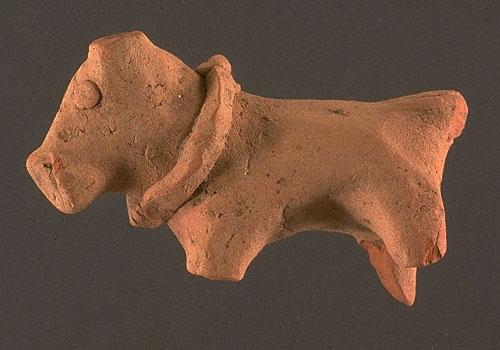
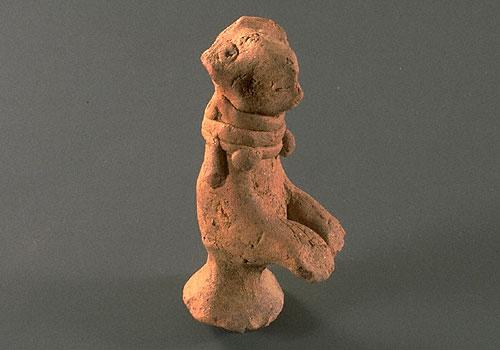
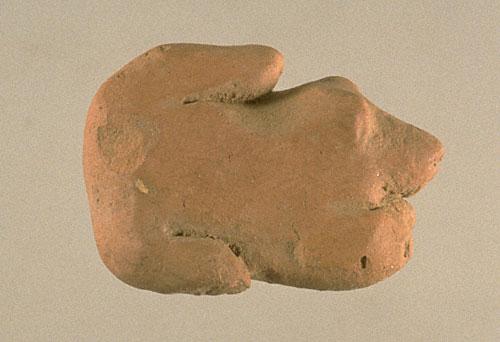
  • Some texts from ancient Mesopotamia mention imports received from the land of "Meluhha", widely considered a reference to the Indus Civilization. Among these imports, according to some interpretations, is a colored dog. A number of dog figurines have been found at Harappa and at other Indus sites. The collars found on dog figurines probably signify domestication, unlike the collars on the rhinoceros or the large feline figurines. Approximate dimensions (W x H(L) x D): 1.9 x 5.3 x 3.3 cm. Figurine of begging dog with upraised front paws and wearing a beaded collar. The back legs have been shaped into a stand. Hand formed with applique ornaments and eyes. Dogs are also depicted in playful postures, such as one small dog that seems to be crouching with its tail curving up and onto its back. Approximate dimensions (W x H (L) x D): 1.9 x 3.3 x 2.1 cm. Photograph by Richard H. Meadow
    Some texts from ancient Mesopotamia mention imports received from the land of "Meluhha", widely considered a reference to the Indus Civilization. Among these imports, according to some interpretations, is a colored dog. A number of dog figurines have been found at Harappa and at other Indus sites. The collars found on dog figurines probably signify domestication, unlike the collars on the rhinoceros or the large feline figurines. Approximate dimensions (W x H(L) x D): 1.9 x 5.3 x 3.3 cm. Figurine of begging dog with upraised front paws and wearing a beaded collar. The back legs have been shaped into a stand. Hand formed with applique ornaments and eyes. Dogs are also depicted in playful postures, such as one small dog that seems to be crouching with its tail curving up and onto its back. Approximate dimensions (W x H (L) x D): 1.9 x 3.3 x 2.1 cm. Photograph by Richard H. Meadow

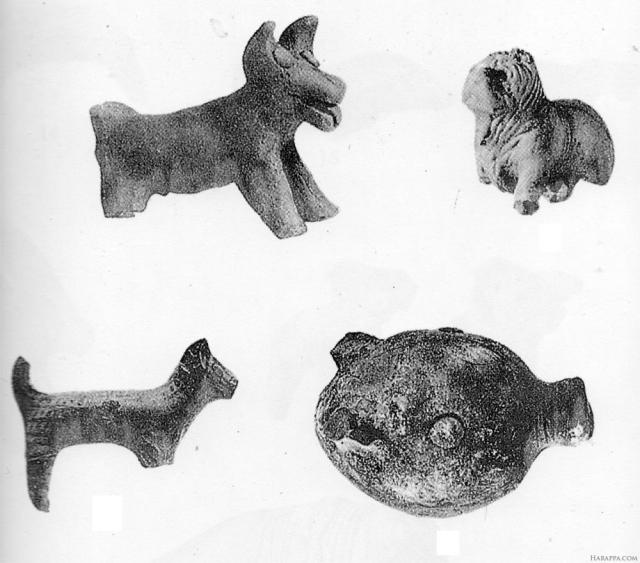
A number of dog figurines have been found at Harappa and at other Indus sites. The collars found on dog figurines probably signify domestication, unlike the collars on the rhinoceros or the large feline figurines.

"With the dog, pig, goat and bear it is different, for although these animals are regarded as more or less 'sacred' or taboo,they are nowadays worshiped either not at all or only by a very few. Thus, the dog is respected by hunting and pastoral tribes, and is even deified by the dog sect of the Bhils; but in the eyes of Hindus generally, and of Musulmans as well, it is an impute animal." (Marshall p. 73, Mohenjo-daro I)

Art

Blog Posts by Subject (16)
  • Animals
  • Art
  • Children
  • City Life
  • Conferences
  • Crafts and Industry
  • Evolution
  • Excavations
  • Food
  • Homes
  • Media
  • Museums
  • Mysteries
  • News
  • People
  • Seals
© Harappa.com 1995-2026 31