Often archaeology is all about digging deep, trying to get to the bottom layers on a site, intensively recording depths and detail. Sometimes it is about casting a wider net, in this case a larger area near an old bed of the Beas River in Punjab. >
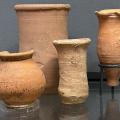
A Sherlock Holmes-style investigation into over four thousand year old pots to determine, as best as modern lipid residue analysis allows, the foodstuffs that they once held to draw a bigger and better picture of food practices on the Arabian Gulf during the so-called Umm an-Nar period (ca. 2700-2000 BCE). Many of these pots were imported ancient Indus Black-Slipped Jars. >
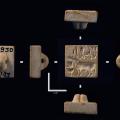
This book, at least 15 years in the making, is a major contribution to the study of the ancient Indus script, the product of diligent research and the careful collection of all known Indus inscriptions into a single database and two volume publication. >
This, the second volume of a comprehensive catalog of Indus signs "lists all Indus inscriptions that are currently available and presents the temporal as well as spatial distribution of inscribed ar… >
Lithic (stone) tools were the machine tools of the Bronze Age. This very well-written article shows how "the study of stylistic difference and technological continuities and discontinuities observed in lithic assemblages at ancient sites can provide important new information regarding the spread and development of Harappan Civilization as well as about other regional Chalcolithic cultures." >
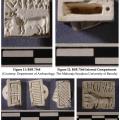
"This paper reports a broad range of new observations about sign behaviour in relation to and independently of animal behaviour on Indus seal-impressions," writes the author. >