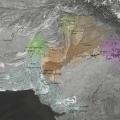
This thought-provoking paper explores the widespread similarity and standardization in material culture across the Indus Valley Civilization, termed by others as the ‘Harappan Veneer’. >
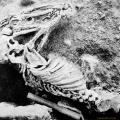
This 40 page paper presents an in-depth analysis aiming to elucidate the biological affiliations of individuals found in atypical burial contexts at Mohenjo-daro through craniometric studies. This is murky stuff - craniometric studies or "the measurement of the skull and facial structure" - becaus… >
This 1990 article from the Deccan College Bulletin's Memorial volume for H.D. Sankalia, an eminent Indian archaeologist, is a summary in one place of the archaeological work done in Pakistan after 1947. Much of this is relevant to wider than national boundaries. >
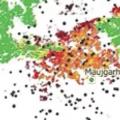
An important video that describes how surveying archaeological sites at scale in India and Pakistan can be undertaken, using survey of India maps from the colonial period to help locate potential locations of interest. >
A new 37 (to start) slide section takes the viewer through the ancient Indus pieces at the National Museum of Pakistan in Karachi. Pakistan's ancient Indus holdings are actually scattered across provincial, national and site museum collections. >
As Dr. Rafique Mughal leads the first major excavation at the site of Ganweriwala in the Cholistan desert – an exceptionally exciting development in ancient Indus archaeology – it is well worth reviewing his earlier papers, many of which were published in Pakistani archaeological journals forty or more years ago. >