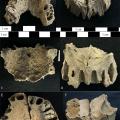
The study from Frontiers in Medicine, March 2025 presents the first paleopathological evidence for lepromatous leprosy in Bronze Age Oman (2500–2000 BCE), specifically at the site of Dahwa. >
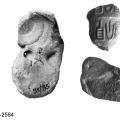
"Once considered in all their components, clay sealings can in fact be key objects for understanding several aspects of the socio-economic organisation of the Indus Civilization," writes the author of this important recent paper built on years of work and thinking about the unique Lothal sealing trove he has done so much to help us understand. >
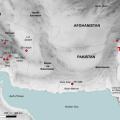
This is an extremely important paper, just published in Nature. It completely scrambles timelines around South Asia and the development of agriculture in the region. >
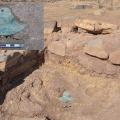
Sometimes you have to find something far away to understand something nearby. This seems to be the case with the discovery of a complete set of copper cymbals in Oman, which have allowed archaeologists to be much more sure that similar finds of only one cymbal in Mohenjo-daro and elsewhere were actually musical instruments. >
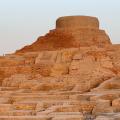
What was really going on at the so-called stupa mound in Mohenjo-daro? This important paper by Giovanni Verardi and Federica Barba challenges the long-standing interpretation of the so-called Stupa Mound at Mohenjo Daro, as a Buddhist stupa dating to the 2nd century AD. >
"But even more revealing for the intensity of contact and commercial exchange between the two alluvial heartlands was the discovery in the Louvre reserves of a well-preserved clay impression stamped by an inscribed Indus seal, which had been brought to the museum by a dealer shortly before World War I, before the Indus Civilization had even been recognized." >