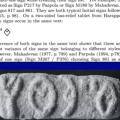
Dr. Asko Parpola takes an in-depth look at the recent claims of other researchers like Bryan K. Wells and Andreas Fuls that the Indus script has upward of 700 different signs. >
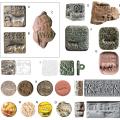
A must-read paper for those fascinated by the extensive trade networks that the ancient Indus civilization was integrated with. Infused with the latest research from the many regions in question, it summarizes and delves into the evidence of people, texts, animals, minerals and plants to seals and weights, pottery, stone, metal and ivory objects, statues, games and toys and more. >
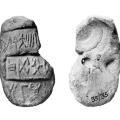
A very nicely illustrated exposition of the unique set of 70 baked clay sealings found in Lothal, Gujarat by an archaeologist who has long been investigating what they tell us about ancient Indus trade and administrative practices. >
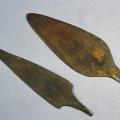
Whether or not the ancient Indus civilization was peaceful or not has intrigued a number of scholars and led to books like Jane McIntosh's A Peaceful Realm (2001). The apparent lack of weaponry and depictions of warfare, possibly ideas on the supposed egalitarianism of Indus civilization have led to a preponderance of this hypothesis. >
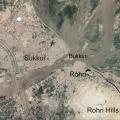
We know so little about so many Indus sites, including ones that are buried beneath modern cities and may never be discovered. One such potentially large settlement is Lakheen-Jo-Daro, sometimes also called Lakhan Jo Daro, bits of which have been found in and around the modern city of Sukkur, Sindh, on the Indus River, just across the monumental chert deposits in the Rohri Hills. >
A well-illustrated overview of the ancient Indus site of Dholavira, its history and construction with a leading authority on the civilization in Gujarat, India. >