Harappa

Harappa, Punjab ancient Indus civilization excavations, figurines, seals and other objects.

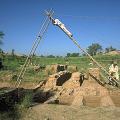
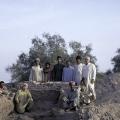
Excavation of the Late Harappan Period habitation levels was undertaken by the Harappa Project in 1996 in Trench 38 under the direction of Manabu Koiso, Japan (front left seated with red turban) and Field Director J. Mark Kenoyer (standing far right… >

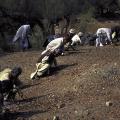
Excavations in 2000 on the west side of Mound E (Trench 54) began with surface collecting to recover any significant artifacts including inscribed objects and craft indicators. >

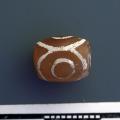
This carnelian bead has been artificially colored with white lines and circles using a special bleaching technique developed by the ancient Harappans. >

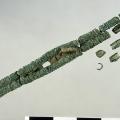
This unique discovery of a coiled copper-alloy wire necklace (H2000/2242-01) has traces of fibers preserved on the inside. Recent studies indicate that the fibers are from the wild silk moth, Antheraea mylitta, commonly called "Tussar" silk today (I… >

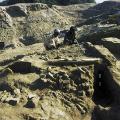
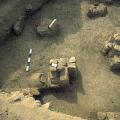
The excavations of the lower slope area of Trench 54 South revealed a robbed brick wall void filled with rubble (foreground) and a room filled with manufacturing debris from faience and steatite working. >

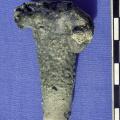
A glazed terra cotta kiln setter with bone fused onto the splayed surface appears to have been an important part of the firing process in the Trench 54 South faience workshop. >

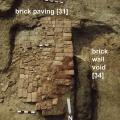
In Trench 57 West, excavations in 2001 revealed a large paving of backed bricks that may have been part of a courtyard or room originally bordered by massive baked brick walls. >

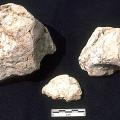
Large lumps of a bluish grey paste that may have been used to make faience objects. Faience is made by melting quartz rock and then regrinding the glassy frit to make a paste that is then fired once again. Indus faience is sometimes multicolored (se… >