Harappa

Harappa, Punjab ancient Indus civilization excavations, figurines, seals and other objects.

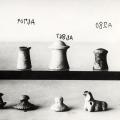
10 small objects in two rows of five each. Top row: Similar looking objects published in Vats 1940 (Vol. II), Plate CXVII, nos. 28-31. Vats described these as “chessman shaped lingams” and mentioned that they “are found in very large numbers … >

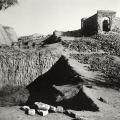
"Due south of Mound F, and across the village road going west to the hamlet of Hafiz Bullah, stands Mound AB—the highest of all the mounds at Harappa (Pl. I). Roughly, it is a parallelogram in shape, measuring some 1,450 ft. from north to south by 8… >

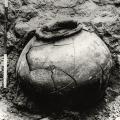
"It was at this point that the large earthen jar (No. A 233 of the list and photo. No. 2741) came to light. The contents of this vessel were a number of domes­tic earthenware utensils, a stone chess figure, etc." - Daya Ram Sahni, Annual Prog… >

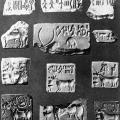
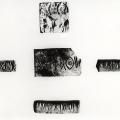
ENGRAVED WITH A PICTOGRAPHIC SCRIPT UNLIKE ANY PREVIOUSLY KNOWN INDIAN ALPHABET, BUT SOMEWHAT RESEMBLING MYCENAEAN PICTOGRAPHS: PRE-HISTORIC SEALS FROM MOHENJO-DARO AND HARAPPA [From Sir John Marshall's story in the issue describing the finds… >

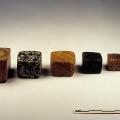
Cubical weights in graduated sizes.These weights conform to the standard Harappan binary weight system that was used in all of the settlements. The smallest weight in this series is 0.856 grams and the most common weight is approximately 13.7 grams,… >

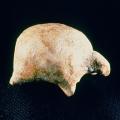
Terra cotta turtle figurine from Harappa. Harappa Archaeological Research Project. >

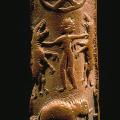
Plano convex molded tablet showing a female deity battling two tigers and standing above an elephant. A single Indus script depicting a spoked wheel is above the head of the deity. On the reverse (89), an individual is spearing a water buffalo wi… >

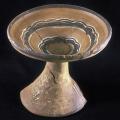
Pedestaled vessels such as this hand-built painted bowl-on-stand of the Ravi Phase appear to be the predecessors of a vessel form that becomes more common during the later Kot Diji and Harappa Phases. >