Home

Main navigation

  • home
  • slides
  • essays
  • articles
  • books
  • video
  • q & a
  • blog
Secondary menu
  • about us
    • scholars
    • privacy
    • support
    • image rights
    • credits
    • contact us
  • resources

Harappa

Harappa, Punjab ancient Indus civilization excavations, figurines, seals and other objects.

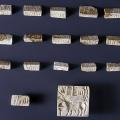
Sixteen three sided tablets

Sixteen three sided tablets (c. 2300 BCE) with incised inscription on each face were found all together in the debris that had been dumped over the curtain wall (54). On one of the three sides is an inscription that is identical to the last two sign… >

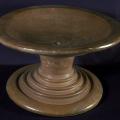
Dish-on-stand

Late Harappan Period Dish-on-stand from Harappa with a hole in the center of the dish that may have been used for a special ritual purpose. The dish is pedestaled on a heavy base with triple ridges. This unique form of vessel was found at the foot o… >

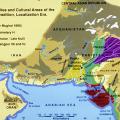
Late Harappan Localization Era Map

This map shows the major cultural interaction regions c. 1900-1300 BC: Cemetery H in the north, Jhukar in the south and Rangpur in Gujarat. During this period there were still urban centers in the Punjab and Sindh, but there was a breakdown in trade… >

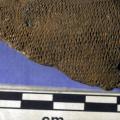
Fragment with fabric impression

A terracotta fragment with fabric impression from Trench 54 provides clues on the types of weaving carried out by the ancient Harappans. >

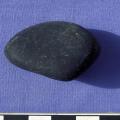
Black basalt pebble

A black basalt pebble found in the excavations in Trench 54 has a few faint traces of gold colored streaks that may indicate it was used as a touchstone. Pure gold has a strong yellow-orange streak, while alloyed gold yields a slightly different hue. >

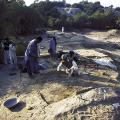
Upper slope excavations

After scraping the surface, excavations of the upper slope of Trench 54 South revealed scattered bricks and a terra cotta molded tablet. >

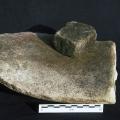
Grindstone and pestle

A concave grindstone and angular pestle found in a room adjacent to the Trench 54 South workshop may have been used for grinding faience paste. >

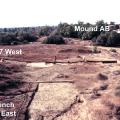
Trench 57 excavations

Excavations of Trench 57, on the west side of Mound E, during 2000 revealed large mud brick platforms or walls with remnants of baked brick drains just below the modern surface. Looking West. >

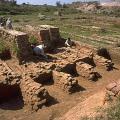
the original forms of the baked brick walls and hollow buttresses of the "granary"

After clearing the overlying silt, the original forms of the baked brick walls and hollow buttresses of the "granary" could be made out. The three high walls in the upper left of the image are part of a later rebuilding of the entire structure after… >

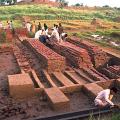
View, After completing the excavation

After completing the excavation, the trenches were filled with sifted sediment and the "granary" structures were covered with a protective plaster made of clay and straw. >

Pagination

  • First page
  • Previous page
  • …
  • Page 63
  • Page 64
  • Page 65
  • Page 66
  • Page 67
  • Page 68
  • Page 69
  • Page 70
  • Page 71
  • …
  • Next page
  • Last page
© Harappa.com 1995-2026 31