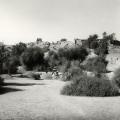
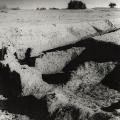
Published in ARASI 1924-25, Plate XXV (a). Title: ‘Harappa: Mound B, General View from East’. “A large trench excavated in mound B (Plate XXV a) behind the Naugaza tomb during my operations of 1920-21 and 1923-24 had revealed fragments o… >
"It was therefore decided to carry a trench wide and long enough to lay bare the general lie of the remains hidden in it. A plan and section of this trench will be published in a special article and will show the nature of the structural remains exposed." >
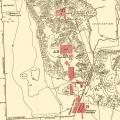
A close view of Mound AB at Harappa from Madho Sarop Vats, Excavations at Harappa, Delhi, 1940, pp. 17, published some 16 years after Sahni's excavations here during the 1924-24 season. Excerpts from Vats' description of the the mound are availa… >
POSSIBLY WORN ON THE WRISTS OF PREHISTORIC INDIAN BEAUTIES SOME THREE THOUSAND YEARS AGO: BANGLES (ABOUT 3 1/2 IN. ACROSS) OF BLUE GLASS PASTE, FOUND AT HARAPPA >
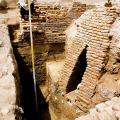
Excavated by the Harappa Archaeological Research Project in 1993, this large corbelled drain was built in the middle of an abandoned gateway at Harappa to dispose of rainwater and sewage. >
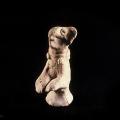
Figurine of begging dog with upraised front paws and wearing a beaded collar. The back legs have been shaped into a stand. Hand formed with applique ornaments and eyes. Material: terra cotta Dimensions: 7.1 cm height, 3.7 cm length, 2.9 cm width… >
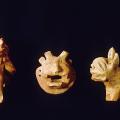
Three terra cotta objects that combine human and animal features. These objects may have been used to tell stories in puppet shows or in ritual performances. On the left is a seated animal figurine with female head. The manner of sitting suggests… >
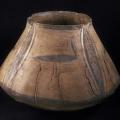
This Ravi Phase hand-built pot with polychrome design was found next to the one with intersecting circles illustrated earlier (11). The net and bird motifs are found at other sites to the northwest in Bannu district, but they do not continue into th… >
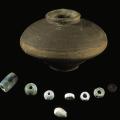
A small pot dating to the Period 3C of the Harappa Phase (c. 2200-2000 BCE) was found in excavations on Mound E in 1998. This tiny pot contained fired steatite beads similar to those made during the Ravi Phase as well as faience beads and beads made… >