Home

Main navigation

  • home
  • slides
  • essays
  • articles
  • books
  • video
  • q & a
  • blog
Secondary menu
  • about us
    • scholars
    • privacy
    • support
    • image rights
    • credits
    • contact us
  • resources

Jonathan Mark Kenoyer

Slides on the archaeology and excavation of ancient Indus Valley sites including Harappa by Jonathan Mark Kenoyer of the University of Wisconsin, Madison.

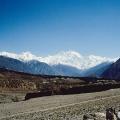
Himalaya mountains

Nanga Parbat and numerous other glacier draped mountains of the Himalaya, Karakorum and Hindu Kush provide a continuous source of water for the Indus and its tributaries. These mountain ranges also provided important timber, animal products, and min… >

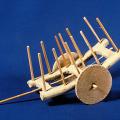
Toy carts, Nausharo

Terra cotta toy carts from the Harappan period site of Nausharo in Baluchistan. Holes along the length of the cart serve to hold wooden side bars and at the center of the cart two of the wooden side bars can be extended below the frame to hold the a… >

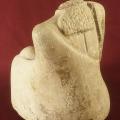
Seated male

Seated male figure with head missing (45,46). On the back of the figure, the hair style can be partially reconstructed by a wide swath of hair and a braided lock of hair or ribbon hanging along the right side of the back. A cloak is draped over t… >

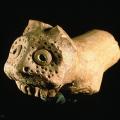
Tiger? figurine

Tiger or leopard figurine with incised facial features, including punctated dots on the face that could be whisker marks. This figurine depicts a normal feline without horns or human face and therefore probably represents the actual wild animal. Han… >

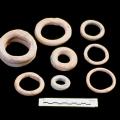
Terra cotta bangles, Mohenjo-daro

Many of the terra cotta bangles were originally painted with black or red designs. Such ornaments are found in the thousands and may have been worn, broken and discarded much as glass bangles are used today throughout the subcontinent. >

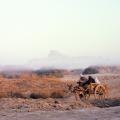
Mohenjo-daro "Citadel" mound and Stupa in the mist

  • Mohenjo-daro Citadel mound and Stupa in the mist

Local villagers cross the site in a donkey cart in the early morning mist, with the Buddhist stupa perched on top of the "citadel" mound. The modern road winds through the low-lying area between the "citadel" and "lower town." >

Room in between L and SD Areas

  • Mohenjo-daro, Room in between L and SD Areas

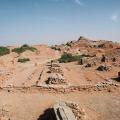
Narrow brick walls define the outlines of a small room or courtyard in the low-lying area between L and SD Areas on the Citadel Mound. A standard size of mud brick and baked brick (7 x 14 x 28 cm) was used in house construction, and a different size… >

Pillared Hall, L Area

  • Mohenjo-daro Pillared Hall, L Area

The pillared hall was approximately 27.5 meters square (90 feet square) with twenty square brick pillars arranged in four rows, only two of which are still preserved. Strips of paved floors sloped from south to north and each strip of flooring had r… >

HR area, large courtyard (room 70)

  • Mohenjo-daro, HR area, large courtyard (room 70)

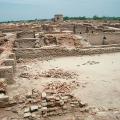
In some neighborhoods, large courtyards were connected to numerous smaller buildings built at different levels. The pilastered wall on the left supported houses at a higher level. A large corbelled arch drain that was later blocked is seen emerging … >

Stairs leading to the second storey, DK-G Area

  • Mohenjo-daro, Stairs leading to the second storey, DK-G Area

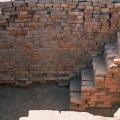
Some houses had small staircases leading to a second story or to a platform for pouring water into a bathing area. >

Pagination

  • First page
  • Previous page
  • …
  • Page 8
  • Page 9
  • Page 10
  • Page 11
  • Page 12
  • Page 13
  • Page 14
  • Page 15
  • Page 16
  • …
  • Next page
  • Last page
© Harappa.com 1995-2026 31