Home

Main navigation

  • home
  • slides
  • essays
  • articles
  • books
  • video
  • q & a
  • blog
Secondary menu
  • about us
    • scholars
    • privacy
    • support
    • image rights
    • credits
    • contact us
  • resources

Jonathan Mark Kenoyer

Slides on the archaeology and excavation of ancient Indus Valley sites including Harappa by Jonathan Mark Kenoyer of the University of Wisconsin, Madison.

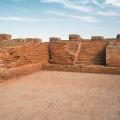
Great Bath, SD Area, looking north

  • Mohenjo-daro, Great Bath, SD Area, looking north

The tank would have been open to the sky, but the surrounding structures would have been roofed. The sidewalls and parts of the floor have been conserved using modern replica bricks. The original eroded wall and corner are visible on the left and ce… >

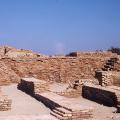
House I, HR area

  • Mohenjo-daro, House I, HR area

House A1 may have been a temple or palace of an important leader. Two doorways lead to a narrow courtyard at a lower level. A double staircase leads to an upper courtyard surrounded by several rooms. This house had numerous seals and fragments of a … >

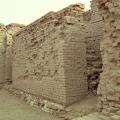
Conservation and Remodeling, DK-G Area

  • Mohenjo-daro, Conservation and Remodeling, DK-G Area

Many of the original walls and features of the ancient buildings in DK-G area have been rebuilt and modified through conservation. The salt encrusted footings represent the original wall; a line of bitumen coated and red painted bricks serve as a da… >

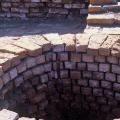
Large Well, HR Area

  • Mohenjo-daro, Large Well, HR Area

Wells were made with wedge shaped bricks to make a strong circular structure. Some bricks were made with special grooves to keep the ropes from sliding sideways when drawing water. >

UM Area, Massive Mud Brick Platform and Fired Brick Sizes

  • Mohenjo-daro, UM Area, Massive Mud Brick Platform and Fired Brick Sizes

A large section of the mud brick platform in the UM Area was removed to be sure that it was not concealing other brick structures. The fired bricks of the upper buildings measured 7 x 15 x 29 cm (approximately 1:2:4 ratio), while those of earlier bu… >

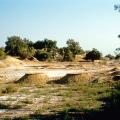
Working Platforms, Harappa

To the south of the "granary" or "great hall" at Harappa is an area with numerous circular working platforms that were built inside small rooms or courtyards. These circular working platforms may have been used for husking grain. One of these circul… >

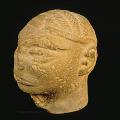
Male head, Mohenjo-daro

Male head probably broken from a seated sculpture. Finely braided or wavy combed hair tied into a double bun on the back of the head and a plain fillet or headband with two hanging ribbons falling down the back (40). The upper lip is shaved and a… >

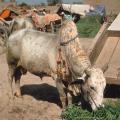
Modern bull

Modern bull at a cattle fair in the Punjab, with a spotted design made with henna [dye]. >

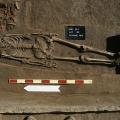
Burial of adult man, Harappa

The body may have been wrapped in a shroud, and was then placed inside a wooden coffin, which was entombed in a rectangular pit surrounded with burial offerings in pottery vessels. The man was buried wearing a long necklace of 340 graduated steatite… >

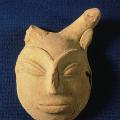
Mask

Miniature mask from Mohenjo-daro of bearded horned deity. The face is made from a mold and thumb impressions from pressing the clay are visible on the back. The mouth is somber and the long almond shaped eyes are open. The short horns arch from the … >

Pagination

  • First page
  • Previous page
  • …
  • Page 10
  • Page 11
  • Page 12
  • Page 13
  • Page 14
  • Page 15
  • Page 16
  • Page 17
  • Page 18
  • …
  • Next page
  • Last page
© Harappa.com 1995-2026 31