Harappa

Harappa, Punjab ancient Indus civilization excavations, figurines, seals and other objects.

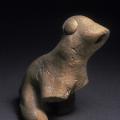
Although many animal figurines have identifiable traits (e. g., the applied "hide" and horn typical of a rhinoceros figurine), some figurines are not readily identifiable. Animal figurines that are badly broken are sometimes particularly difficult t… >

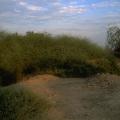
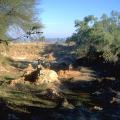
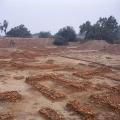
This area in Mound AB, excavated in the 1920's revealed large houses thought to have belonged to upper class members of ancient Indus society. >

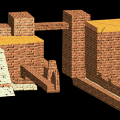
The overall gateway structure, including the street and side drains is bonded at either edge (east and west) by massive mud brick bastions, representing the Mound E and Mound ET perimeter walls. The area between these two mud brick perimeter walls w… >

Daya Ram Sahni found objects he quickly called "inkpot[s] of the shape used in old type Pathsalaif and maktabs to this day" (p. 13). One of these was found in Trench C – "No. C. 2 has three holes in the mouth for the string" (p. 13… >

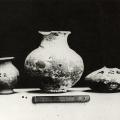
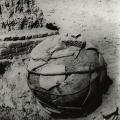
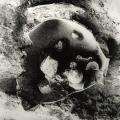
Earthen jar found in Trench A (f). The description of the duplicate photo 40: Large earthen jar (A) of 21 found in western portion of Tr. A (f). The contents of a large and broken jar comprise small terracotta vessels, of which two look, more … >

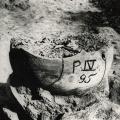
Earthen jar, A (a) in trench A (a) “near the platform of chiselled bricks.” Remains of a jar, crushed, or broken, with field number P IV 95. The field number of jar suggests that this was from Pit IV, which is on Mound AB. However, Sahni excav… >